Search Results
Fine Jewelry University Articles matching: “3 carat diamond cluster ring”
Showing only FJU Article results. Click here to show all results.
Fine Jewelry University
-
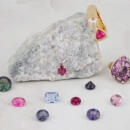
Gem in the Spotlight: Spinel
…, it should be treated and stored with care. Its Mohs hardness of 8 puts it on par with Topaz. It’s softer than diamond or sapphire but harder than quartz, tourmaline, and peridot. With proper care there’s no reason why a piece of spinel …hardness of 8 and good toughness spinel is a great choice for all forms of jewelry. We recommend occasional wear for rings and bracelets, but earrings and pendants are suitable for daily wear. Spinel can come in virtually any color of the…
-
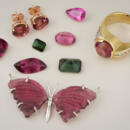
Gem in the Spotlight: Tourmaline
… as their concentration, different colors will be present. Copper, manganese, chromium, and vanadium are the key coloring agents in tourmaline. Another unique facet of tourmaline is its ability to become electrically charged in certain … with opal, tourmaline is October’s birthstone. Care and Cleaning of Tourmaline Tourmaline makes a great gem in a ring for occasional wear or a pendant/earrings for daily wear. Because it isn’t exceptionally hard (Mohs hardness of 7-7.5…
-
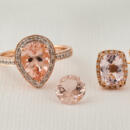
Gem in the Spotlight: Morganite
…. Compared with many other gemstones, Morganite is a relatively new addition with its first recorded discovery occurring in California in the early 1900s. This means you won’t find any tales of ancient kings wearing Morganite on their … believe it to be a powerful stone which facilitates the flow of energy throughout the body due to its ability to bring pure love to the wearer. Morganite is also believed to balance emotions and bring harmonizing fulfillment as it …
-
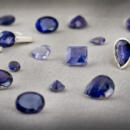
Gem in the Spotlight: Iolite
…, and the United States. In fact, the largest known iolite was found in Wyoming, weighing in at a whopping 24,000 carats (that’s over 10 pounds)! This commonality helps keep the price of iolite very affordable making it an excellent choice… different colors when observed at different angles, especially with polarized light. Pleochroism is caused by differing absorption of light rays in doubly refractive crystals. Thus, no singly refractive gemstone can exhibit pleochroism. …
