Search Results
Fine Jewelry University Articles matching: “Anniversary diamond rings”
Showing only FJU Article results. Click here to show all results.
Fine Jewelry University (Show All FJU Articles)
-

Gem in the Spotlight: Alexandrite
Emerald by day, ruby by night, more expensive than diamond and more illustrious than sapphire, emerald, or even ruby, alexandrite has been known around the world as one of the… alexandrite’s tremendous value and rarity, it is recommended to be worn carefully or put in jewelry such as earrings or pendants that are less prone to impacts than rings, for example. Alexandrite isn’t the only stone to display color-…
-
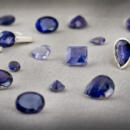
Gem in the Spotlight: Iolite
… gemstone that is absolutely wonderful in jewelry. The subtle range of hues from blue to violet makes for elegant rings, pendants, and earrings. All in all, iolite is a great
-
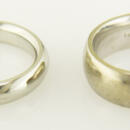
The Difference Between White Gold and Platinum
…Some manufactures of white gold look light yellow and never achieve the white look. It does not sound like a big problem because if you don’t like the light yellow look of a specific manufacture, then don’t buy it. New white gold rings are usually coated with a hard protective finish of rhodium, a silver-white metal like platinum. The rhodium plating is used to make the white gold look more white. The Rhodium is very white and very hard, but it does wear away eventually…
-
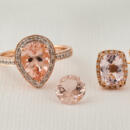
Gem in the Spotlight: Morganite
… it compliments most skin tones and complexions. It is entirely appropriate for everyday wear, and it can be worn as rings, pendants, earrings, necklaces, bracelets, pins, brooches, or whatever else you can think of. Morganite is …
-

Gem in the Spotlight: Topaz
…ht. History and Lore Topaz in its pure form is naturally colorless, clear like a diamond. The famous “Braganza Diamond” was thought to be the largest diamond ever found (prior to the Cullinan Diamond) at 1,680 carats and was set in the Portu… to put coatings on lenses for glasses and cameras. It is also one of the processes that is used to create lab grown diamonds . A thin, multi-colored film is bonded on the surface of colorless topaz to create all the colors you see in Mystic…
-
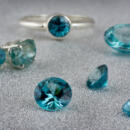
Gem in the Spotlight: Blue Zircon
… of zircon creates one of the liveliest displays found in any colored gem. In fact, before any of the manmade diamond simulates were made, the colorless version of zircon was used in jewelry to mimic diamond. Why? Natural zircon is known for…, brown, or red variety of Zircon. Jargon is the colorless, pale gray, or pale yellow variety of Zircon. Matura Diamond is another trade name for colorless Zircon. Starlite is the name for the blue gem variety of Zircon. The color of …
-
Gem in the Spotlight: Quartz
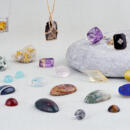
…eading names for gems. Quartz seems to have more than its fair share of misnomers. One famous one is “Alaska Diamond” for rock crystal alongside “Herkimer Diamonds” (see below). In recent times, the term “Green Amethyst,” which was commonly … (yes you read that correctly) slab of natural clear quartz and is one of the largest clusters ever found. Herkimer diamonds are a famous type of quartz not for their rarity, but for their ability to pass for diamonds to the untrained eye. …
-
Gem in the Spotlight: Jade
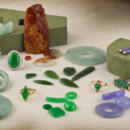
… like splitting hairs, but it actually has a big impact on how gems are worn and what they can handle. We all know diamonds are the hardest gem commonly available on earth. If you scraped them together, a diamond would scratch a piece of …mark on the diamond. However, if you decided to smack both gems with a hammer (please don’t try this at home), the diamond would have a greater chance of shattering than the tougher jade. Nephrite: A silicate rich in calcium, iron and …
-
Synthetic Gems: The Whole Story
… to plastic to high tech chemical tongue twister like gadolinium gallium garnet (also called GGG) and the modern diamond simulant Moissanite, a man made silicon carbide. In gemology, any material used to look like a gem is called a simulant… clear glass, rock quartz, GGG, and Moissanite are all diamond simulants. They look like diamonds, but they are not diamonds. These simulants are easy for a well trained and equipped gemologist to detect. But if you had gem material that is …
