Search Results
Fine Jewelry University Articles matching: “Star 763 vi”
Showing only FJU Article results. Click here to show all results.
Fine Jewelry University (Show All FJU Articles)
-

Laser Jewelry Repair
… you probably think of blowing things up (all you sci-fi people) or high tech scientific experiments or even crazy villains trying to take over the world with a “laser”. One of the last things you think a laser can do is to work on your… to repair our customer’s jewelry. Lasers can repair an antique enameled pin without damaging the enamel or leaving visible signs of the restoration work. Our laser can fix jewelry without removing the stones or running the risk of …
-
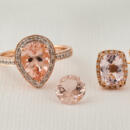
Gem in the Spotlight: Morganite
… pastel or pale in color by nature and known for its transparent peach-pink hue though it also occurs as soft pink, violet-pink, or pale salmon. It is the subtle, understated nature of Morganite’s color that sets it apart from many of … scale which is comparable to emerald, topaz, and spinel. Its refractive index is 1.560 – 1.600, and its specific gravity is 2.67 – 2.90. These characteristics help identify Morganite as beryl and distinguish it from other pink …
-
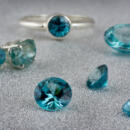
Gem in the Spotlight: Blue Zircon
… colorless, pale gray, or pale yellow variety of Zircon. Matura Diamond is another trade name for colorless Zircon. Starlite is the name for the blue gem variety of Zircon. The color of Starlite is rarely natural, and is almost always … the 1880s. Tiffany’s famous gemologist George Kunz was a distinguished zircon advocate. He proposed the name “starlite” to promote the gem’s fiery nature. Unfortunately, the name never caught on, and today we use the simpler term, Blue …
-
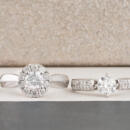
Anatomy of a Ring
… without the shank. If the ring has a distinct design feature on the top part, the ring shank is generally said to start at the point that the design stops. A jeweler will usually add or remove metal from the bottom of the shank when …going as far up the sides as the design and the extent of the wear require. If you are careful with your rings (removing them when doing dishes, cleaning with harsh chemicals, gardening, etc.), the shank may last your lifetime and …
-
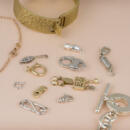
Types of Jewelry Clasps
… jewelry like necklaces, bracelets, and anklets. Clasps allow for easy attachment and removal of the jewelry and provide a secure way to wear and display precious pieces. The history of jewelry clasps dates back centuries, and we can … is released, the spring tension closes the clasp again. PROS Strength – Lobster clasps are sturdy and ideal for heavier chains. Ease of Use – They are easier to use than some other styles (e.g. spring rings) because of their size and …
-
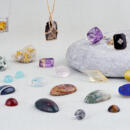
Gem in the Spotlight: Quartz
… Quartz. These less common gems can be stunningly beautiful and intricate. You can also see why Prasiolite has previously been referred to as “Green Amethyst.” Under the surface, all of these fancy names are just different ways of … that you have seen the most. It is a beautiful stone that commonly features a rich white base color with veins of vibrant yellow gold. Crystal Name Color Aventurine Translucent with small green platelet inclusions that shimmer Gold …
