Search Results
Fine Jewelry University Articles matching: “Black sapphire”
Showing only FJU Article results. Click here to show all results.
Fine Jewelry University (Show All FJU Articles)
-
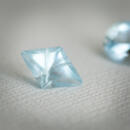
Gem in the Spotlight: Aquamarine
… in shades of blue-green. Aquamarine has a refractive index of 1.577 to 1.583 and is doubly refractive. Aquamarine’s specific gravity is 2.72 and it has a Mohs hardness of 7.5-8.0. For comparison, this means that it is softer than Sapphire, harder than Quartz, and similar to Topaz. This makes it a very durable stone that is suitable for regular wear. But, care should still be taken to ensure that the stone is not damaged. Caring For and Cleaning Aquamarine To maintain the …
-
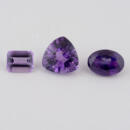
Gem in the Spotlight: Amethyst
… found in smaller deposits in other countries such as Russia, the United States, and Canada. Amethyst is known for its durability with a Mohs hardness rating of 7. For reference, amethyst is roughly as hard as tourmaline, softer than sapphire and topaz, and harder than opal and tanzanite. This makes it a durable gemstone that is resistant to scratching and chipping. It is also resistant to heat and chemicals which means that it can withstand daily wear and tear. Amethyst …
-
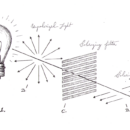
The Magic of Polarized Light
…gemstones, due to their unique chemical structure, actually polarize light themselves. These gems are doubly refractive (DR) and they will split incoming light in multiple directions. Some common examples of doubly refractive gems are sapphire, tourmaline, and moissanite. These are contrasted with singly refractive (SR) gems like diamond that only bend light in one direction. Gemologists use the term birefringence to refer to how doubly refractive a particular gem is. By …
-

Gem in the Spotlight: Topaz
… preference. Topaz itself is a hard gemstone with a Mohs hardness of 8. Mohs hardness is a standardized metric of how difficult it is to scratch something. For reference, topaz is a bit softer than diamond which is a 10 and corundum (sapphire/ruby) which is a 9 on the scale. It is a bit harder than emerald at 7.5-8 and quartz which comes in at 7. Here are some more gemological stats for reference: Refractive index: 1.619 to 1.627 Birefringence: 0.008 to 0.010 Specific …
-
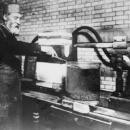
How Are Lab Grown Diamonds Made?
…quest continued. Diamonds are a crystalline form of carbon, and so making artificial carbon crystal was the problem of lab grown diamonds. For decades, manufacturers of synthetic gemstones tried growing diamonds like they grew rubies, sapphires, and emeralds. It failed. Then they had the idea to grow diamonds in the lab like they grew in nature. High Pressure High Temperature Diamonds How does nature form diamond crystals? Nature does it very deep underground. Diamond …
-
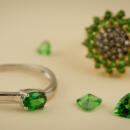
Gem in the Spotlight: Tsavorite Garnet
The discovery of Tsavorite in East Africa in the 1960s changed the jewelry world. Here was a gem with the color to rival the most exquisite emeralds and the clarity of the cleanest sapphires, all with the time tested durability of garnet. Tsavorite is a unique form of garnet with a stunningly vivid green color. It is bright and lively with a high refractive index giving it excellent sparkle and scintillation. Tsavorite …
-

Art Deco vs. Art Nouveau Style Jewelry
…Art Deco jewelry design embraced symmetry, bold colors, and streamlined forms influenced by Cubism and the Machine Age. Precious metals like platinum and white gold alongside rare and valuable gemstones such as diamonds, emeralds, and sapphires, were the materials of choice for Art Deco jewelry makers. The most prevalent diamond cut found in Art Deco jewelry is the Old European cut, but some pieces still incorporated Old Mine cuts or transitional cuts. Design Principles Art…
