Search Results
Fine Jewelry University Articles matching: “Blue diamonds”
Showing only FJU Article results. Click here to show all results.
Fine Jewelry University (Show All FJU Articles)
-
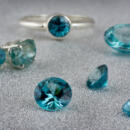
Gem in the Spotlight: Blue Zircon
…, brilliance, and flashes of color or fire just like diamond. Zircon also is known for its variety of colors. Blue zircon is the most popular color. But, zircon can be almost any color you can imagine including red, yellow, orange, brown… yellow variety of Zircon. Matura Diamond is another trade name for colorless Zircon. Starlite is the name for the blue gem variety of Zircon. The color of Starlite is rarely natural, and is almost always heat treated. Of course, the blue…
-

Gem in the Spotlight: Topaz
… to put coatings on lenses for glasses and cameras. It is also one of the processes that is used to create lab grown diamonds . A thin, multi-colored film is bonded on the surface of colorless topaz to create all the colors you see in Mystic … comes to mind when I hear people discussing Topaz. You can hear one person say, “I love Topaz; it reminds me of a blue sky.” Then her friend says back, “Topaz may be like a golden sunset, but not the sky.” A third friend will chime in, “…
-
The Birthstones
…the emblem of fearlessness and invincibility. Courage, strength and fortitude were attributes given to the wearer of diamonds. The diamond has been a symbol of eternal love since the 15th century, when Archduke Maximillian of Austria sealed …: Aquamarine Originating its name from the Latin “aqua marina” meaning “sea water”, the aquamarine is a light blue to greenish blue beryl, most valuable when it’s a shade of darker blue. Sailors often wore amulets of aquamarine to give …
-
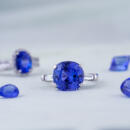
Gem in the Spotlight: Tanzanite
…. The Queen of Kilimanjaro tiara contains the largest faceted tanzanite in the world. The tiara also contains 913 diamonds and 803 tsavorite garnets all set in 18 karat white gold. It is owned by former Apple CEO Michael Scott who routinely … diamond. But, what makes Tanzanite so popular is its color. Tanzanite’s gorgeous color is a captivating mix of blue and purple. The deep hues of violet, indigo, and blue come together in an unrivaled blend only found in tanzanite. Yet, …
-
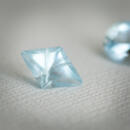
Gem in the Spotlight: Aquamarine
Aquamarine derives its name from the Latin which literally means “seawater,” a tribute to its beautiful blue color. As a member of the beryl family, Aquamarine has some illustrious cousins in addition to a rich history of its… the true spirit of the sea. aquamarine was believed to guarantee a happy marriage Best known for its beautiful blue color, aquamarine was used to bring happiness, eternal youth, and control passion. In the body, aquamarine was thought to… large crystals. Aquamarine’s main pigment comes from iron. The color spectrum of aquamarine varies from very pale blue to a deep blue, the finest specimens being the deepest in color. Most aquamarine stones have a subtle green component…
-

What are “Blood Diamonds”?
Conflict diamonds are diamonds illegally traded to fund conflict in war-torn areas, particularly in central and western Africa. The … action in opposition to those governments, or in contravention of the decisions of the Security Council.” These diamonds are sometimes referred to as “blood diamonds.” In July 2000, the global diamond industry made clear to the international… the Kimberley Process Certification System. This system was formally adopted in 2003 and guards against conflict diamonds entering the legitimate diamond supply chain. The diamond industry also adopted a voluntary System of Warranties to …
-

How Are Lab Grown Diamonds Made?
…, many have tried to achieve this impressive feat. We have only recently been able to produce gem quality, lab grown diamonds that are large enough to be used in jewelry. But, how is it done? Early Efforts Throughout history, many people have… his techniques with some reported successes, but none could ever be scientifically verified. The quest continued. Diamonds are a crystalline form of carbon, and so making artificial carbon crystal was the problem of lab grown diamonds. For …
-
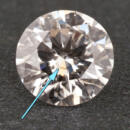
What Are Lab Grown Diamonds?
In the simplest terms, lab grown diamonds are diamonds that have been made by people instead of mined out of the earth. If it’s so simple, you might wonder …this sentence. The complexity arises from the fact that lots of different terms have been used to describe lab grown diamonds and their cousins, and not everyone uses these terms in the same way. So, let’s begin with some vocabulary. …. The same cannot be said of the many imitation or fake gems that are often, incorrectly, described as synthetic diamonds. This misrepresentation has seriously confused what the term “synthetic” means, and it’s why most producers of man-made …
-
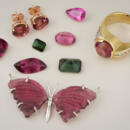
Gem in the Spotlight: Tourmaline
… colors have their own names: Rubellite: is red, pinkish red, orangy red, or pink tourmaline. Indicolite: is dark blue, dark violetish blue, or dark greenish blue tourmaline. Paraíba: is a copper colored blue, intense violetish blue, or …
