Search Results
Fine Jewelry University Articles matching: “Jewelry stamp”
Showing only FJU Article results. Click here to show all results.
Fine Jewelry University (Show All FJU Articles)
-
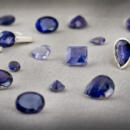
Gem in the Spotlight: Iolite
Iolite is maybe not the first gemstone people think of for their blue-violet jewelry, but it should be near the top of the list. Iolite’s color range of blue, blue-violet, and violet competes for …, if you ever need to find north, I would recommend a different approach. Just use the finger that your iolite jewelry is worn on to open the compass app on your smart phone. From there you can find both magnetic north and true north. I … than Opal, and softer than Emerald or Topaz. Because of this, some extra care should be taken with your iolite jewelry. Try to avoid wearing it in situations where it might be hit against hard objects to keep it free from cracks and small …
-
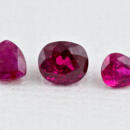
Gem in the Spotlight: Ruby
… form of aluminum oxide with a Moh’s hardness of 9. This makes ruby one of the hardest gems commonly used in jewelry second only to diamond (which has a Moh’s hardness of 10) and moissanite (which is in between). Rubies only occur in the …treated to hide surface scratches or inclusion. Avoid using household chemicals or abrasives when wearing them. Ruby jewelry can be wiped with a soft, dry cloth often to remove dust and residue that will mar its sparkle. For more intense …
-
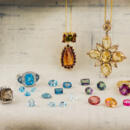
Gem in the Spotlight: Topaz
… varieties have their own names: Imperial Topaz: When both orange and red colors are present (although much of the jewelry industry might call golden topaz imperial). Golden Topaz: Yellow to orange without any red component (could be called … the birthstone for November and blue topaz is one of the birthstones for December. We have a great variety of topaz jewelry in stock at our everyday low prices. They make great gifts for anyone born in November or December, and for anyone
-

How to Tell If a Diamond Is Natural or Lab Grown
… realize is that most lab grown diamonds are clearly and responsibly disclosed to be synthetic. The big scare in the jewelry industry is non-disclosed lab grown diamonds that are sold as natural diamonds. But, it is important to know that … we have recently added to our own gem lab. This incredible machine is used by some of the world’s top gem labs and jewelry manufacturers daily, and it has already helped us catch undisclosed lab grown diamonds. It does not suffer from many …
-
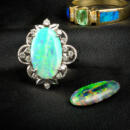
Gem in the Spotlight: Opal
… index of 1.37 – 1.47 and a Mohs hardness of 5.5-6. This makes it one of the softest gemstones commonly used in jewelry. For reference, here are the Mohs hardness values for some other gemstones you may know: Diamond 10, Sapphire 9, Amethyst… glue the fragile piece of opal to it before cutting and leaving them glued together after the fact to be set into jewelry. In triplets, that thin piece of opal is sandwiched between a piece of onyx and a clear piece of laboratory grown …
-
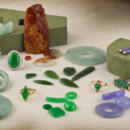
Gem in the Spotlight: Jade
…. Jadeite was incredibly important to the Mayans and Aztecs. They used it for medicinal purposes and carved it into jewelry and religious artifacts. When jadeite reached China for the first time in the 1700s, gem carving had already been a …it originally was. Now that this technology has been available for decades, almost all of the jade on the mainstream jewelry market is dyed. Dyed jade is detectable using standard spectroscopy. Another common method of treating jade is …
-
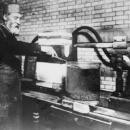
How Are Lab Grown Diamonds Made?
…feat. We have only recently been able to produce gem quality, lab grown diamonds that are large enough to be used in jewelry. But, how is it done? Early Efforts Throughout history, many people have claimed to have successfully synthesized …to create the first reproducible lab grown diamond. The diamond was tiny and nowhere near clear enough to be used in jewelry, but it was a start. As a side note here, we should mention that even today most of the man-made diamonds that are …
-
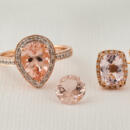
Gem in the Spotlight: Morganite
… of beryl “Morganite”. It has good hardness, durability, luster, and brilliance which make it a great gemstone for jewelry. For the gem nerds out there, here are a few of the gemological properties of Morganite. Its durability is rated as … and clarity. It has good hardness, durability, luster, and brilliance which make it a great gemstone for jewelry. Its wide range of soft pinkish colors makes it highly desirable as it compliments most skin tones and complexions. It is …
-
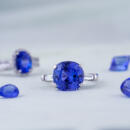
Gem in the Spotlight: Tanzanite
…, similar to smoky quartz. The very small percentage of tanzanite that isn’t heated and is still pretty enough for jewelry displays trichroism. Trichroism is an effect that causes gemstones to display different colors when viewed at … of this means that the scarcity of tanzanite is only expected to increase. So, should you get a piece of tanzanite jewelry? Our advice would be to buy jewelry that you love to look at. No one knows what the future holds for the markets, but…
