Search Results
Fine Jewelry University Articles matching: “Name necklaces”
Showing only FJU Article results. Click here to show all results.
Fine Jewelry University (Show All FJU Articles)
-
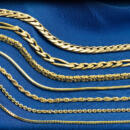
Types of Necklace Chains
… group. The distinguishing feature of the paperclip chain is its long oval link which resembles the portions of its namesake. One advantage of the paperclip chain is its efficient use of metal. So, you can have a big chain look without a …, oval links that move in one direction. The interlocking twisted links look like wheat stalks giving the chain its name. This chain, although not as popular as the cable and box, is a great pendant chain. They are rounded and flexible …
-
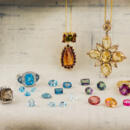
Gem in the Spotlight: Topaz
…Even though its true identity is now known, the large imposter still sits in the Portuguese crown jewels today. The name “Topaz” comes from the old Greek name “Topazios” for an island in Foul Bay, Egypt (now called Zabargad). Of course, … at the start of the article, topaz comes in a huge variety of colors. Some of these varieties have their own names: Imperial Topaz: When both orange and red colors are present (although much of the jewelry industry might call golden …
-
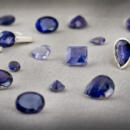
Gem in the Spotlight: Iolite
…of blue, blue-violet, and violet competes for public attention with sapphire, tanzanite, and amethyst. They may have name recognition, but iolite has a rich, unique color and great gem value on its side. It is more subtlety nuanced than …
-
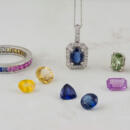
Gem in the Spotlight: Sapphire
… Treasury. The famous sapphire remains there, decorating the Imperial Crown ordered by Queen Victoria. Deriving its name from the Greek word for blue, sapphire used to refer to any blue stone. By the late 1800’s, the sapphire and ruby …
-
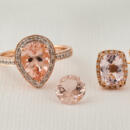
Gem in the Spotlight: Morganite
… and complexions. It is entirely appropriate for everyday wear, and it can be worn as rings, pendants, earrings, necklaces, bracelets, pins, brooches, or whatever else you can think of. Morganite is considered very affordable, especially … as emerald and aquamarine. Because of its association with emerald it is sometimes called “Pink Emerald”. Other names for Morganite are “Pink Beryl”, “Rose Beryl”, and “Cesian (or caesian ) Beryl”. “Cesian” refers to the presence of the …
-
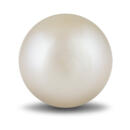
Gem in the Spotlight: Pearl
…! Keep in mind though that pearl rings in particular are not intended for everyday wear. Rings take more abuse than necklaces or earrings, so wear your pearls rings for special occasions to help them last. Restring Often: Even following all of…, pendants, and rings. Seed Pearls: These are very small pearls, typically less than 2mm in diameter, that are so named because they resemble the size and shape of a seed. They are formed in the same way as larger pearls only a smaller …
-
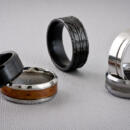
Alternative Metals for Men’s Jewelry
…element with the symbol Ti and atomic number 22. It is resistant to corrosion in sea water and chlorine. Titanium is named after the Titans, mythical Greek giants who ruled the earth and personified different forces of nature. There are … choice for a man’s wedding band. It is light weight, has the cool image of being made of aircraft metal, and is named after gods. It has a contemporary look, an affordable price, and comfortability making it an outstanding ring to wear …
-
Measuring Gold Weight
… is heavier. Others say they are both a pound so they weigh the same. Both are wrong. There is more trivia about gold weights. The troy system historically was used for measuring the weight of drugs, precious metals and gemstones. The name comes from the French city of Troyes. The noble metals (gold, silver and platinum) all use the troy system. A troy ounce is 20 pennyweights. The pennyweight was the weight of a silver penny in medieval England. When pennies were …
-
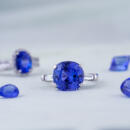
Gem in the Spotlight: Tanzanite
… of Tanzanite Tanzanite was originally discovered in 1967 in Tanzania, near Mount Kilimanjaro, by a Maasai tribesman named Ali Juuyawatu, although the credit often goes to an Indian prospector named Manuel de Sousa who Ali showed the … identification channels they found their way to the Henry B. Platt, the VP of Tiffany & Co. at the time, who named the stone tanzanite after the country of origin. Tiffany then started marketing the stone around 1968. The geological …
