Search Results
Fine Jewelry University Articles matching: “Natural”
Showing only FJU Article results. Click here to show all results.
Fine Jewelry University (Show All FJU Articles)
-
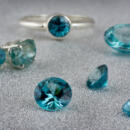
Gem in the Spotlight: Blue Zircon
… the manmade diamond simulates were made, the colorless version of zircon was used in jewelry to mimic diamond. Why? Natural zircon is known for its scintillation, brilliance, and flashes of color or fire just like diamond. Zircon also is … name for colorless Zircon. Starlite is the name for the blue gem variety of Zircon. The color of Starlite is rarely natural, and is almost always heat treated. Of course, the blue form of Zircon is also called, imaginatively, Blue Zircon. …
-
Gem in the Spotlight: Alexandrite
… of 8.5. Because of its high hardness, alexandrite is suitable for everyday wear. That being said, because of natural alexandrite’s tremendous value and rarity, it is recommended to be worn carefully or put in jewelry such as earrings or …is so famous, in fact, that color-change itself is often called “The Alexandrite Effect.” Stunning color change on a natural alexandrite. Alexandrite History and Lore Alexandrite was first found in the Ural Mountains in Russia in the 1830s. …
-
Art Deco vs. Art Nouveau Style Jewelry
… (1890 – 1910), Art Nouveau emerged as a rebellion against the academic art of the time. It sought to bring the natural world into artistic design, emphasizing flowing lines, asymmetrical forms, and motifs inspired by plants, flowers, and … adherence to symmetry and balance. Organic Forms: Art Nouveau jewelry features sinuous, curving lines that mimic natural shapes such as vines, flowers, and insects. Asymmetry is very common. Symbolism: Often imbued with symbolism and …
-
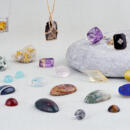
Gem in the Spotlight: Quartz
… and sometimes unattainably expensive? If you answered quartz to all these questions you would be right (but naturally you looked at the title and knew). Quartz is one of the most common minerals on earth. Many quartz varieties are cut into … is the “Berns Quartz,” named after the donors that donated it to the Smithsonian’s National Museum of Natural History. It is an 8,000 pound (yes you read that correctly) slab of natural clear quartz and is one of the largest clusters ever …
-
Frequently Asked Question about Jewelry
…. They are making the diamonds both more transparent (whiter) and more colorful. Some colors are more vibrant then natural diamonds. Next, some are changing the clarity of diamonds with laser drill and fills. The new fills are getting harder… on the diamond. Color is actually looking for the absence of color or transparency. Clarity is inclusions and natural birthmarks of a diamond and is useful as identifying characteristics. For more information see the Diamond Buying Guide . …
-
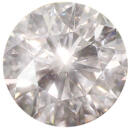
Diamond Buying Guide: The 4 C’s
…gold, it may appear to be much more yellow than it is. Fancy color diamonds are a fun, non-traditional option. While natural fancies can be very rare and extremely expensive, we now have the technology to permanently color a white diamond to…imagine. You can read more about fancy diamond colors here. Clarity Most diamonds contain inclusions. Inclusions are natural birthmarks and useful as identifying characteristics. Clarity grading is done with 10 power magnification. The …
-
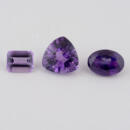
Gem in the Spotlight: Amethyst
… amethysts are now appearing in inexpensive jewelry. Because the cost of testing is higher than the cost of even the natural stones it is not often performed. Beware of stones of perfect clarity, calibrated sizes, and precision cutting. … 96 carat heart shaped amethyst. It resides in the collection of the Smithsonian Institution, National Museum of Natural History. The amethyst was most likely mined in Brazil and exhibits a deep, rich purple color. Amethyst also naturally …
-
Gem in the Spotlight: Iolite
…violet. Unlike many other popular gems, iolite cannot be heat treated to enhance its color. The color you see is the natural color of the stone when it was first discovered. This adds value to many gem buyers who don’t want a treated …refers to iolite’s pleochroic nature. iolite cannot be heat treated to enhance its color. The color you see is the natural color of the stone when it was first discovered. Coming in at 7 to 7.5 on the Mohs hardness scale, iolite is a …
-
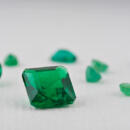
Gem in the Spotlight: Emerald
… is a treatment to the stone that makes the fractures less visible. There are many ways to do this with oiling, natural resin, synthetic resin, silicone, and epoxy being the most. The basic technique involves submerging the stone in the …donated to the Smithsonian by Mr. and Mrs. O. Roy Chalk in 1972 and can be seen on display at the National Museum of Natural History in a platinum and gold ring surrounded by 60 pear-shaped diamonds. According to workers at the Muzo mine in …
