Search Results
Fine Jewelry University Articles matching: “necklace gemstone”
Showing only FJU Article results. Click here to show all results.
Fine Jewelry University (Show All FJU Articles)
-
Synthetic Gems: The Whole Story
Synthetic rubies, emeralds, sapphires, diamonds and more are everywhere. Man made gems come in many forms: every thing from simple glass to high tech chemical tongue twister like gadolinium gallium garnet (also called GGG) and the modern diamond simulant moissanite. Synthetic gems are not bad, fakes, or the curse of a modern society. The more you know about them, the better you can understand their place in our society and in the jewelry world.
-
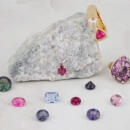
Gem in the Spotlight: Spinel
…, but now the entire color pallet has been opened up. Spinel is arguably the most overlooked and underappreciated gemstone of all time. Spinel was first made in a lab over 100 years ago when scientists who were trying to synthesize blue … found in. Because of how easily it can be created in a lab, synthetic spinel has been used to imitate many other gemstones (ruby, sapphire, tourmaline, zircon, etc.). In fact, the ubiquity of synthetic spinel may be part of the reason why …
-
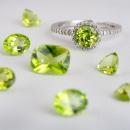
Gem in the Spotlight: Peridot
Peridot is a lovely yellow-green gem with a rich history. Legend has it that Peridot was the favorite gemstone of Cleopatra. The ancients called it the “gem of the sun”. It was believed that peridot could chase away evil …dissolve curses but only when set in gold. Peridot is the birthstone for August. It is also the accepted anniversary gemstone for the 16th year of marriage. Peridot’s unique yellow-green color is very attractive. The name “Peridot” is simply …
-
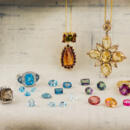
Gem in the Spotlight: Topaz
… the coating can be scratched and the gem ruined very easily. Mystic topaz comes in virtually any color from sunset orange, to violet, to green. These coatings can allow topaz to be any color of your preference. Topaz itself is a hard gemstone with a Mohs hardness of 8. Mohs hardness is a standardized metric of how difficult it is to scratch something. For reference, topaz is a bit softer than diamond which is a 10 and corundum (sapphire/ruby) which is a 9 on the scale. It …
-
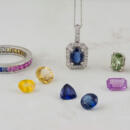
Gem in the Spotlight: Sapphire
… her spouse had been unfaithful. Sapphire refused to shine when worn by the wicked or impure. Known as the celestial gemstone, the sapphire has been treasured for thousands of years. Known as the celestial gemstone, the sapphire has been …, which measures 10 on the Mohs scale, sapphire and ruby (9 on the Mohs scale) are the toughest and most durable gemstones. This toughness makes the sapphire a long lasting piece of jewelry as well as a useful industrial tool. One last legend…
-
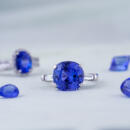
Gem in the Spotlight: Tanzanite
Beauty and rarity are two wonderful traits in a gemstone. Tanzanite has them both. In fact, it is estimated that Tanzanite is 1,000 times rarer than diamond. But, what makes… that isn’t heated and is still pretty enough for jewelry displays trichroism. Trichroism is an effect that causes gemstones to display different colors when viewed at different angles. Tanzanite in its raw form has three colors: blue, purple…has been heated by using a dichroscope. This is a tool that gemologists use to separate the pleochroic colors that a gemstone has. If there is a strong green component at any angle, then it likely has not been heated. The main factors that …
-
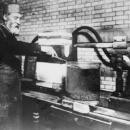
How Are Lab Grown Diamonds Made?
…, but none could ever be scientifically verified. The quest continued. Diamonds are a crystalline form of carbon, and so making artificial carbon crystal was the problem of lab grown diamonds. For decades, manufacturers of synthetic gemstones tried growing diamonds like they grew rubies, sapphires, and emeralds. It failed. Then they had the idea to grow diamonds in the lab like they grew in nature. High Pressure High Temperature Diamonds How does nature form diamond …
-
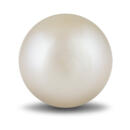
Gem in the Spotlight: Pearl
… famous figures, including Napoleon III and Elizabeth Taylor. During Taylor’s ownership, the pearl was set into a necklace designed by Cartier, which also included diamonds and rubies. The La Peregrina pearl is one of the largest and most …! Keep in mind though that pearl rings in particular are not intended for everyday wear. Rings take more abuse than necklaces or earrings, so wear your pearls rings for special occasions to help them last. Restring Often: Even following all …
-

How to Tell If a Diamond Is Natural or Lab Grown
How can I know if my diamond is real? This is a question we get all the time, and it’s not as simple as you might think. First, you have to decide what “real” means. If you are not familiar with lab grown diamonds, you might want to check out our introduction to lab grown and synthetic diamonds before continuing with this article. So, now you know that lab grown diamonds are just as real as natural diamonds, but we still want to be able to tell them apart. When
