Search Results
Fine Jewelry University Articles matching: “synthetic diamons”
Showing only FJU Article results. Click here to show all results.
Fine Jewelry University
-
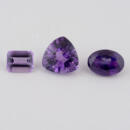
Gem in the Spotlight: Amethyst
… the world. Heavily increased supply dropped prices consistently over the last 200 years which is why, despite its beauty, amethyst is such an affordable stone today. About 50% of amethysts on the world market are now believed to be synthetic. This is a fairly recent discovery as many low cost, high quality, deeply colored amethysts are now appearing in inexpensive jewelry. Because the cost of testing is higher than the cost of even the natural stones it is not often …
-
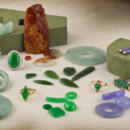
Gem in the Spotlight: Jade
…-1.688 Hardness: 6.5-7 Toughness: Exceptional (only slightly less than nephrite) Specific gravity: 3.3 Simulant and Synthetics Jade Jade has been replicated and imitated over the years. The most common imitations by far are dyed quartz, glass…, serpentine, maw sit sit, and hydrogrossular garnet. For a short amount of time, a few laboratories produced synthetic (lab-created) jadeite. This proved to be unprofitable and was quickly forgotten; however, a small amount of it remains on …
-
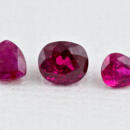
Gem in the Spotlight: Ruby
… property of rubies is that they emit fluorescent light at a very specific wavelength (694 nanometers) under certain conditions. Scientists used this fact to build the world’s first functioning laser in 1960 using a flashlamp and a synthetic ruby. This amazing machine demonstrated the concept first described by Albert Einstein over 40 years earlier in 1917. Rubies are formed under extreme pressure and temperature in metamorphic rocks such as marble, gneiss, and schist. The …
-
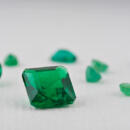
Gem in the Spotlight: Emerald
… extremely rare! Current estimates say that less than 1% of emeralds are untreated. Fracture filling is a treatment to the stone that makes the fractures less visible. There are many ways to do this with oiling, natural resin, synthetic resin, silicone, and epoxy being the most. The basic technique involves submerging the stone in the desired liquid (oil, resin, etc.) inside of a vacuum chamber. Then a vacuum is applied which pulls all of the air out of the cracks and draws …
-
How to Sell Your Jewelry
…99% determined by the gem. On the other hand the gem could add zero to the value. The two critical factors are the gem itself and the condition. Some gems have a higher value then others. A natural ruby is worth many times more then a synthetic ruby. Diamonds are generally more valuable then amethysts. Knowing your gem’s grade and rarity will help with understanding its value. The condition of the gem is critical to the value. Some chips and abrasions can justify the …
