Search Results
Fine Jewelry University Articles matching: “Crystals”
Showing only FJU Article results. Click here to show all results.
Fine Jewelry University (Show All FJU Articles)
-
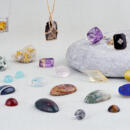
Gem in the Spotlight: Quartz
… have a long tradition of being special to people. Microcrystalline means that the stone is made up of smaller crystals and not one big crystal. Sometimes you can see this structure with your naked eye as with Drusy Quartz, or you may need … White quartz with gold matrix laced through it (also called Gold Quartz or Gold in Quartz) Drusy Quartz Very small crystals in a layer of matrix The Cryptocrystalline Varieties of Quartz There is one more crystal formation of quartz called …
-
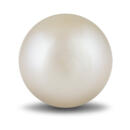
Gem in the Spotlight: Pearl
…. Luster A combination of the pearl’s exterior shine and glow from within. Created by light reflected from tiny crystals in the nacre. Mabe pearl Cultured pearls grown against an oyster’s shell rather than in an oyster’s tissue. The result is… pearl Nacre Pronounced nay-ker. The crystalline substance secreted by an oyster to form a pearl. The microscopic crystals of nacre refract light to produce a pearl’s color and luster. Nucleus The object which is artificially inserted into a …
-
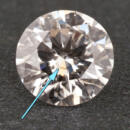
What Are Lab Grown Diamonds?
… the gemological world, synthetic is a highly technical term. When speaking technically, synthetic gems are man-made crystals with the same crystal structure and chemical composition as the specific gem that is being created. Therefore, a “…. The important takeaway for now is that both of these processes are highly advanced technologies that produce crystals with the exact same chemical structure and optical properties as natural diamonds. Now, let’s compare lab grown diamonds …
-
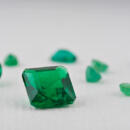
Gem in the Spotlight: Emerald
… is that they often contain inclusions. Sometimes these inclusions are referred to as jardin (the French word for garden) because they look like moss or a garden inside of the stone. These inclusions are tiny fissures, bubbles, or crystals that are visible to the naked eye. These inclusions are not necessarily considered flaws but rather add character and uniqueness to the stone. At this point in history, almost every emerald has had some level of treatment to make the …
-
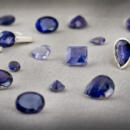
Gem in the Spotlight: Iolite
… is an optical phenomenon in which a substance appears to be different colors when observed at different angles, especially with polarized light. Pleochroism is caused by differing absorption of light rays in doubly refractive crystals. Thus, no singly refractive gemstone can exhibit pleochroism. The process works because of the ability of a gem to absorb different wavelengths of transmitted light depending upon its crystallographic orientations. Iolite is one of the most …
-
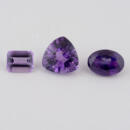
Gem in the Spotlight: Amethyst
… Smithsonian Institution, National Museum of Natural History. The amethyst was most likely mined in Brazil and exhibits a deep, rich purple color. Amethyst also naturally occurs as geodes (rock that contains a hollow cavity lined with crystals) and the most famous of these is the largest ever found. This amazing stone named “The Empress of Uruguay” stands 10.7 feet tall and weighs over 5,500 pounds! Care and Cleaning Amethyst is a relatively low-maintenance gemstone and can…
-
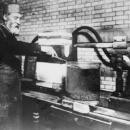
How Are Lab Grown Diamonds Made?
… tried growing diamonds like they grew rubies, sapphires, and emeralds. It failed. Then they had the idea to grow diamonds in the lab like they grew in nature. High Pressure High Temperature Diamonds How does nature form diamond crystals? Nature does it very deep underground. Diamond growing naturally takes place about 100 miles below the earth’s surface. Why? Because that is where the conditions of extremely high pressure and high temperature needed for diamond formation …
-
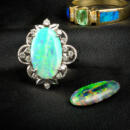
Gem in the Spotlight: Opal
… them glued together after the fact to be set into jewelry. In triplets, that thin piece of opal is sandwiched between a piece of onyx and a clear piece of laboratory grown quartz (the same material that is commonly used for watch crystals). This helps show off the opal’s beauty while keeping it safe and strong. Doublets and triplets are much less expensive than other forms of opals because you only need a paper thin slice to make them. History and Lore of Opal Opal’s rich …
-
Caring for and Cleaning Your Jewelry
…. Diamonds are remarkable gems, hard enough to scratch everything, including themselves. Diamonds that rub together will scratch each other, so keep diamonds from touching one another when you wear or store them. Diamonds are crystals that grow with a cleavage plane. This means a sharp blow on a vulnerable spot can chip or break the stone. This does not mean that diamonds are not very durable. They are the most durable of all gems. In fact diamonds have been through a lot …
