Search Results
Fine Jewelry University Articles matching: “Gemstones”
Showing only FJU Article results. Click here to show all results.
Fine Jewelry University (Show All FJU Articles)
-
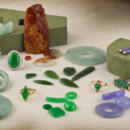
Gem in the Spotlight: Jade
Jade has one of the richest heritages of all gemstones. People have been using jade from as early as 6,000 BC, and it has been an incredibly important part of Asian, Central American, and North American history ever since. But, what is jade, and what has given it such a prominent place in…
-

Gem in the Spotlight: Alexandrite
…, warm soapy water and a soft-bristled brush are always the safest. With its innate durability and proper care a high-quality stone will last for generations. Why Alexandrite? Alexandrite is simply one of the most magnificent gemstones that exists. Its almost magical ability to change color has captivated our hearts and minds for generations. Alexandrite is one of June’s birthstones (along with moonstone and pearl) making it a great gift for that special someone with a …
-
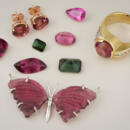
Gem in the Spotlight: Tourmaline
…. Care and Cleaning of Tourmaline Tourmaline makes a great gem in a ring for occasional wear or a pendant/earrings for daily wear. Because it isn’t exceptionally hard (Mohs hardness of 7-7.5), it should be stored away from other gemstones that could potentially damage it. Tourmaline should not be put into an ultrasonic cleaner or steam cleaned, and should only be cleaned with warm, soapy water. With proper care, a piece of tourmaline jewelry can last generations and even …
-
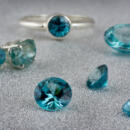
Gem in the Spotlight: Blue Zircon
Zircon may be last in the alphabet of gemstones, but it is first in sparkle. The crystal structure of zircon creates one of the liveliest displays found in any colored gem. In fact, before any of the manmade diamond simulates were made, the colorless version of zircon was used in …
-
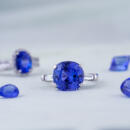
Gem in the Spotlight: Tanzanite
… that isn’t heated and is still pretty enough for jewelry displays trichroism. Trichroism is an effect that causes gemstones to display different colors when viewed at different angles. Tanzanite in its raw form has three colors: blue, purple… become extremely scarce in the future, further driving its desirability. Tanzanite is currently one of the rarest gemstones, and it is only found in one place on earth. In 2002 tanzanite was added as one of the birthstones for December …
-
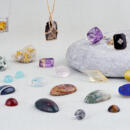
Gem in the Spotlight: Quartz
… at the title and knew). Quartz is one of the most common minerals on earth. Many quartz varieties are cut into gemstones, but some varieties are very rare. Some are ordinary like rock quartz, others are exotic like Drusy Quartz. Some quartz … create a dim light which is often called cold fire, as it creates enough light to see, but no heat. Famous Quartz Gemstones Quartz is one of the most abundant minerals in the earth’s crust, but there are still many noteworthy examples that …
-

Jewelry Repair FAQ
… to again. What is retipping, and why do I need it? In a large number of jewelry pieces, the valuable diamonds and gemstones are held in place with prongs. With wear, the tops of these prongs can become worn down. If the prongs wear down too …metal (usually gold or platinum) to the top of worn down prongs to keep the gemstone secure. In the past, almost all gemstones had to first be removed from their mountings for retipping, and then reset after it was done due to the high heat …
-
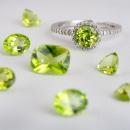
Gem in the Spotlight: Peridot
Peridot is a lovely yellow-green gem with a rich history. Legend has it that Peridot was the favorite gemstone of Cleopatra. The ancients called it the “gem of the sun”. It was believed that peridot could chase away evil spirits and dissolve curses but only when set in gold. Peridot is the birthstone for August. It is also the accepted anniversary gemstone for the 16th year of marriage. Peridot’s unique yellow-green color is very attractive. The name “Peridot” is simply a French word derived from the Arabic for green. Peridot’s
-
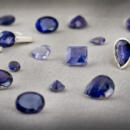
Gem in the Spotlight: Iolite
Iolite is maybe not the first gemstone people think of for their blue-violet jewelry, but it should be near the top of the list. Iolite’s color range of blue, blue-violet, and violet competes for public attention with sapphire, tanzanite, and amethyst. They may have name recognition, but iolite has a rich, unique color and great gem value on its side. It is more subtlety nuanced than amethyst and deeper than many tanzanites. Iolite’s name comes from its violet color. It is from the Greek word “ios” meaning violet. Unlike many
