Search Results
Fine Jewelry University Articles matching: “London blue topaz white gold”
Showing only FJU Article results. Click here to show all results.
Fine Jewelry University (Show All FJU Articles)
-
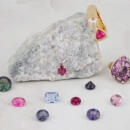
Gem in the Spotlight: Spinel
…like with all precious stones, it should be treated and stored with care. Its Mohs hardness of 8 puts it on par with Topaz. It’s softer than diamond or sapphire but harder than quartz, tourmaline, and peridot. With proper care there’s no … of all time. Spinel was first made in a lab over 100 years ago when scientists who were trying to synthesize blue sapphire wound up creating spinel by mistake. Since then many processes have been used and perfected to create spinel in …
-
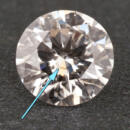
What Are Lab Grown Diamonds?
… a simulant. Simulants are gems that look like a real, natural gem but are actually another material. So, a clear or white sapphire can be a diamond simulant because it looks like a diamond. That white sapphire can be natural or, here’s …made (natural vs synthetic), but that it is a substitute that looks like another gem. So, we can say that a man-made white sapphire is a “synthetic sapphire” or that it can be used as a “diamond simulant,” but it would be incorrect to say …
-
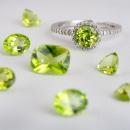
Gem in the Spotlight: Peridot
…. It has a Moh’s hardness of 6.5 to 7 which makes it a little harder than Moonstone and a little softer than Topaz. Care should be taken to protect peridot from scratches, sharp blows, household chemicals and extreme temperature changes. …gem of the sun”. It was believed that peridot could chase away evil spirits and dissolve curses but only when set in gold. Peridot is the birthstone for August. It is also the accepted anniversary gemstone for the 16th year of marriage. …
-
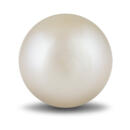
Gem in the Spotlight: Pearl
…iridescent rainbow colors that shimmer on or just below a pearl’s surface). Pearls come in a range of colors, from white to black, with many shades in between. The most valuable pearls are those with a pure, even color, such as white, pink…French Polynesia. They are known for their dark, rich colors, which range from dark green and gray to deep shades of blue and black. Tahitian pearls are generally large with an average size of 9mm to 18mm, and they commonly have baroque …
-

How to Sell Your Jewelry
…are unsure of how to clean the jewelry or gem, let the professionals do it. Here are some cleaning tips. Never clean gold and gems in chlorine. Ammonia based cleaning products are used throughout the jewelry industry, but they can damage … toothbrush, then rinse thoroughly for most jewelry. A hard toothbrush and toothpaste or toothpowder will scratch gold and hurt some gems. The best cleaning tip is to know for certain the best cleaners to use on your jewelry and do it …
-
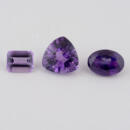
Gem in the Spotlight: Amethyst
… deposits in other countries such as Russia, the United States, and Canada. Amethyst is known for its durability with a Mohs hardness rating of 7. For reference, amethyst is roughly as hard as tourmaline, softer than sapphire and topaz, and harder than opal and tanzanite. This makes it a durable gemstone that is resistant to scratching and chipping. It is also resistant to heat and chemicals which means that it can withstand daily wear and tear. Amethyst has the same …
-
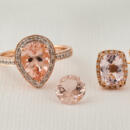
Gem in the Spotlight: Morganite
… gemstone for jewelry. For the gem nerds out there, here are a few of the gemological properties of Morganite. Its durability is rated as excellent. Its hardness is 7.5 – 8.0 on the Mohs hardness scale which is comparable to emerald, topaz, and spinel. Its refractive index is 1.560 – 1.600, and its specific gravity is 2.67 – 2.90. These characteristics help identify Morganite as beryl and distinguish it from other pink gemstones. Morganite is commonly heat treated to …
-
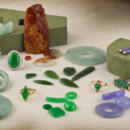
Gem in the Spotlight: Jade
… green. Jadeite can come in many different colors including pink, purple (often called lavender jade), blue, black, white, and the most valuable/desirable color: a vibrant green. The finest of all green jadeite colors is a saturated …
-
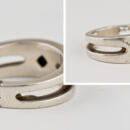
Jewelry Solder: What You Should Know
… we first have to understand metal alloys. If you haven’t already, now would be a great time to read our article on gold purity . Now you should know that the metals that make up our jewelry are actually a mix of multiple different metals… gold jewelry, but the same concepts also apply to silver and platinum as well. If your ring is made out of 14 karat gold, you know that approximately 56% of it is gold with the rest being made up by a variety of different metals like …
