Search Results
Fine Jewelry University Articles matching: “Natural emerald”
Showing only FJU Article results. Click here to show all results.
Fine Jewelry University (Show All FJU Articles)
-
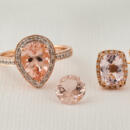
Gem in the Spotlight: Morganite
… popular gemstones. Morganite has an impressive family tree. It is a beryl gem which puts it in the same family as emerald and aquamarine. Because of its association with emerald it is sometimes called “Pink Emerald”. Other names for …. Its durability is rated as excellent. Its hardness is 7.5 – 8.0 on the Mohs hardness scale which is comparable to emerald, topaz, and spinel. Its refractive index is 1.560 – 1.600, and its specific gravity is 2.67 – 2.90. These …
-
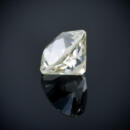
The History of Diamond Cuts
… to change their shape. So, the Romans wore uncut diamonds. One of diamond’s remarkable attributes is that the natural diamond crystal is beautiful without any human modification. Diamonds normally form in the octahedral shape which looks … like two pyramids stuck together at the base. Naturally, the first attempts to enhance diamonds were to polish the natural gem. The “point cut” is the polishing of a natural octahedral diamond. Interesting fact #1 about diamond cuts: …
-
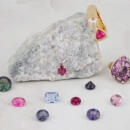
Gem in the Spotlight: Spinel
… by mistake. Since then many processes have been used and perfected to create spinel in even more colors than it is naturally found in. Because of how easily it can be created in a lab, synthetic spinel has been used to imitate many other ….). In fact, the ubiquity of synthetic spinel may be part of the reason why most people have been slow to appreciate natural spinel in its own right. Interestingly, most lab-created spinel has a slightly higher refractive index than natural …
-
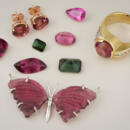
Gem in the Spotlight: Tourmaline
… hundreds of years. But, before the advent of modern gemology, most tourmaline was believed to be ruby, sapphire, or emerald. Gemology of Tourmaline Gemologically speaking, tourmaline is its own mineral and not a species or member of a …was first discovered in 1554 in Brazil when Francisco Spinoza’s expedition confused its vibrant green with that of emerald. Thus began a long trend of confusing tourmaline with other gems. Another notable example of this is the “Caesars Ruby…
-
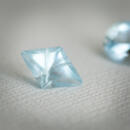
Gem in the Spotlight: Aquamarine
…passed down for generations but this tiara she special ordered from Garrard in 1957. The Gemology of Aquamarine Like emerald, aquamarine is a member of the beryl family (along with morganite, heliodor, and others). Unlike emerald, it is … jewelry, you have come to the right place. At Arden Jewelers, our gemologists understand and appreciate the natural beauty of color gems, and we find mountings that accentuate this beauty to its full extent. You can browse our collection …
-

How Are Lab Grown Diamonds Made?
…. For decades, manufacturers of synthetic gemstones tried growing diamonds like they grew rubies, sapphires, and emeralds. It failed. Then they had the idea to grow diamonds in the lab like they grew in nature. High Pressure High Temperature… that is where the conditions of extremely high pressure and high temperature needed for diamond formation are naturally found. We see diamonds closer to the surface of the earth when a rare type of deep volcano brings them up to where …
-
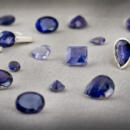
Gem in the Spotlight: Iolite
…violet. Unlike many other popular gems, iolite cannot be heat treated to enhance its color. The color you see is the natural color of the stone when it was first discovered. This adds value to many gem buyers who don’t want a treated …refers to iolite’s pleochroic nature. iolite cannot be heat treated to enhance its color. The color you see is the natural color of the stone when it was first discovered. Coming in at 7 to 7.5 on the Mohs hardness scale, iolite is a …
-
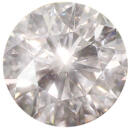
Diamond Buying Guide: The 4 C’s
… round, are especially good at returning light to the viewer which makes them sparkle more than other shapes. The emerald cut, for example, gives a classic look with big flashes of light but very little sparkle or fire. Ultimately, it’s up …gold, it may appear to be much more yellow than it is. Fancy color diamonds are a fun, non-traditional option. While natural fancies can be very rare and extremely expensive, we now have the technology to permanently color a white diamond to…
-
Frequently Asked Question about Jewelry
…. They are making the diamonds both more transparent (whiter) and more colorful. Some colors are more vibrant then natural diamonds. Next, some are changing the clarity of diamonds with laser drill and fills. The new fills are getting harder… on the diamond. Color is actually looking for the absence of color or transparency. Clarity is inclusions and natural birthmarks of a diamond and is useful as identifying characteristics. For more information see the Diamond Buying Guide . …
