Search Results
Fine Jewelry University Articles matching: “Natural emerald”
Showing only FJU Article results. Click here to show all results.
Fine Jewelry University (Show All FJU Articles)
-
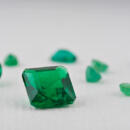
Gem in the Spotlight: Emerald
Springtime exudes life, full of bright colors and renewed energy. Emerald, May’s gemstone, captures this enthusiasm for life in rich elegance. This precious gemstone has been revered for … mineral family (along with morganite and aquamarine) and are valued for their rich green color. The intensity of an emerald‘s hue depends on the presence of chromium and vanadium in the crystal structure. Emerald’s Mohs hardness rating is 7… a moderately refractive gemstone. Its specific gravity ranges from 2.65 to 2.75. One of the distinctive features of emeralds is that they often contain inclusions. Sometimes these inclusions are referred to as jardin (the French word for …
-
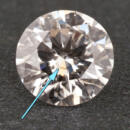
What Are Lab Grown Diamonds?
… is being created. Therefore, a “synthetic diamond” has the same crystal structure and chemical composition as a natural diamond. The same cannot be said of the many imitation or fake gems that are often, incorrectly, described as synthetic … highly advanced technologies that produce crystals with the exact same chemical structure and optical properties as natural diamonds. Now, let’s compare lab grown diamonds to some of the other gems that you might have heard of. Lab Grown …
-

How to Tell If a Diamond Is Natural or Lab Grown
…synthetic diamonds before continuing with this article. So, now you know that lab grown diamonds are just as real as natural diamonds, but we still want to be able to tell them apart. When it comes to diamond simulants like Cubic Zirconia (… they aren’t diamonds. But, with lab grown diamonds, the chemical structure and properties are all the same as natural diamond, so it becomes much more difficult to differentiate them. Responsible Disclosure The first thing to realize is …
-
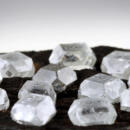
Is a Lab Grown Diamond Right for Me?
… of misinformation and paranoia both from inside the trade and from outside observers. I have heard people say that natural diamonds come with a 400% mark up, or that most mined diamonds are conflict diamonds (both wild falsehoods). On the … consumers’ minds. While the real world issue is not nearly as severe as many people believe it is (over 99.9% of natural diamonds are conflict free, and you can buy verifiable Canadian diamonds of known origin if you want), it is still …
-
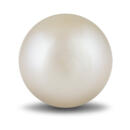
Gem in the Spotlight: Pearl
…time, layer upon layer of nacre is deposited around the irritant, eventually forming a pearl. This process can occur naturally or via human intervention. Natural pearls grow in the wild without human intervention. They are very rare, and … locations around the world. The process by which they are created is completely unpredictable, and as a result, natural pearls come in a wide range of shapes, sizes, and colors. They are typically irregular in shape and have a unique, …
-
The Birthstones
… term: brilliance, hardness, rarity, antiquity, purity and permanence. Learn more about Diamond May’s Birthstone: Emerald A symbol of love and rebirth, the emerald has been treasured for over 4,000 years. The name for the emerald is derived … “smaragdos”, meaning green stone. Spring and green symbolized faith and fertility. The early Christians valued the emerald as a symbol of resurrection. Emerald was believed to have special powers to improve a person’s psychic abilities and …
-
Fake Diamonds: The Great Diamond Attack
… lookalikes. “What is a real diamond?” is a difficult question these days. And the problem of separating a fully natural diamond from all the modern possibilities is quite demanding. So what is a real diamond? Let’s start with the older … but is man made. So, a synthetic diamond is the same chemistry (carbon element) and crystal structure (cubic) as natural diamond but made in a factory. Yes, they can make synthetic diamonds and have for many years now. Most are used in the …
-
Synthetic Gems: The Whole Story
Ruby, sapphire, emerald and alexandrite are very beautiful gems and very rare in their stunning beauty. These four gems have been coveted by… years. But, what if anyone could own them? At gem shows and museums, I have seen jaw dropping rubies, sapphires and emeralds. These gems in high quality have put ownership beyond most people to justify the price. Just a one carat gem could … gemologist to detect. But if you had gem material that is the same chemically, optically and crystal structure as a natural gem, it would be very hard to tell them apart. In gemology we call this a synthetic gem. Synthetic gems are not bad…
-
Gem in the Spotlight: Alexandrite
Emerald by day, ruby by night, more expensive than diamond and more illustrious than sapphire, emerald, or even ruby, … of 8.5. Because of its high hardness, alexandrite is suitable for everyday wear. That being said, because of natural alexandrite’s tremendous value and rarity, it is recommended to be worn carefully or put in jewelry such as earrings or …is so famous, in fact, that color-change itself is often called “The Alexandrite Effect.” Stunning color change on a natural alexandrite. Alexandrite History and Lore Alexandrite was first found in the Ural Mountains in Russia in the 1830s. …
