Search Results
Fine Jewelry University Articles matching: “Pearl diamond cluster ring”
Showing only FJU Article results. Click here to show all results.
Fine Jewelry University (Show All FJU Articles)
-
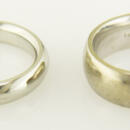
The Difference Between White Gold and Platinum
… its karat. The key to understanding gold karat is the karat value over 24. An example is a 14-karat gold wedding ring. It is 14/24, which equals 58.3% gold and 41.7% alloy. The white color is achieved by a careful choice of the alloying … because if you don’t like the light yellow look of a specific manufacture, then don’t buy it. New white gold rings are usually coated with a hard protective finish of rhodium, a silver-white metal like platinum. The rhodium plating is …
-
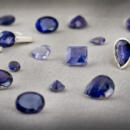
Gem in the Spotlight: Iolite
… different colors when observed at different angles, especially with polarized light. Pleochroism is caused by differing absorption of light rays in doubly refractive crystals. Thus, no singly refractive gemstone can exhibit pleochroism. … than Emerald or Topaz. Because of this, some extra care should be taken with your iolite jewelry. Try to avoid wearing it in situations where it might be hit against hard objects to keep it free from cracks and small chips. Iolite is a …
-
The Birthstones
… aquamarine was believed to instill courage in those who wore them. Learn more about Aquamarine April’s Birthstone: Diamond April’s birthstone is the emblem of fearlessness and invincibility. Courage, strength and fortitude were attributes … love since the 15th century, when Archduke Maximillian of Austria sealed his engagement to Mary of Burgundy with a diamond ring. Of all jewels, the diamond is supreme and worthy of the name precious stone. It qualifies for all the virtues …
-
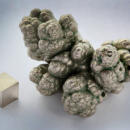
What to Do When Your Ring Irritates Your Skin
…try a new design. We do custom jewelry design , and one of our favorite projects is to take the raw materials (gold, diamonds, gemstones, etc.) from a client’s existing ring and use them to make a new and exciting creation. We can reuse the …Nothing is more frustrating than being unable to wear your engagement ring or other jewelry because it irritates your skin. Don’t worry. There are many options you have when faced with this …but their root causes and solutions are very different. Physical Irritation This can be caused by the design of the ring, a rough area that is the result of normal wear and tear, or a ring that is not sized correctly. If the ring is too …
-
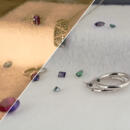
Gem in the Spotlight: Alexandrite
Emerald by day, ruby by night, more expensive than diamond and more illustrious than sapphire, emerald, or even ruby, alexandrite has been known around the world as one of the… our hearts and minds for generations. Alexandrite is one of June’s birthstones (along with moonstone and pearl) making it a great gift for that special someone with a birthday in June. Alexandrite is perfect for someone who wants the best… component, the stone will appear redder. Alexandrite has a refractive index of 1.746-1.755 with an average birefringence of .010. It has a specific gravity of 3.73 and a Mohs hardness of 8.5. Because of its high hardness, alexandrite is …
-
Types of Jewelry Clasps
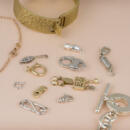
… need to be adjusted though. Bring it in to your local jeweler to have them check it out. Strand Fish Hook Clasp (Pearl Clasp) At first glance you might thing this style of clasp is something like a sideways box clasp. Indeed, some box … catch and prevent the clasp from opening fully. It is a clever and beautiful design that is most often found on pearl strands, but it can work with most chain designs. PROS Style – This is a delicate, low-profile fastener that enhances …
-
Gem in the Spotlight: Opal
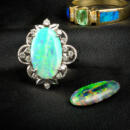
… commonly used in jewelry. For reference, here are the Mohs hardness values for some other gemstones you may know: Diamond 10, Sapphire 9, Amethyst 7, and Peridot 6. Turquoise is about as hard as opal, but you would need to consider Pearl or… shall see the living fire of the ruby, the glorious purple of the amethyst, the sea green of the emerald, all glittering together in an incredible mixture of light.” During the Middle Ages, opal gained an interesting reputation for …
-
What Are Lab Grown Diamonds?
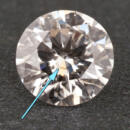
In the simplest terms, lab grown diamonds are diamonds that have been made by people instead of mined out of the earth. If it’s so simple, you might wonder …this sentence. The complexity arises from the fact that lots of different terms have been used to describe lab grown diamonds and their cousins, and not everyone uses these terms in the same way. So, let’s begin with some vocabulary. … mean man-made, copied, unreal, or even imitation. But, in this context, what do we mean when we say “synthetic diamond”? In the gemological world, synthetic is a highly technical term. When speaking technically, synthetic gems are man-made …
-
How Are Lab Grown Diamonds Made?
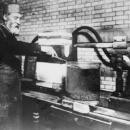
The dream of making a beautiful and valuable diamond from simple carbon has long captivated the imagination of scientists and visionaries alike. Just like the alchemists…, many have tried to achieve this impressive feat. We have only recently been able to produce gem quality, lab grown diamonds that are large enough to be used in jewelry. But, how is it done? Early Efforts Throughout history, many people …. Henri Moissan was one of the early pioneers in the field. In 1893, he claimed to have successfully made a diamond by heating charcoal to 3,500 degrees Celsius inside a carbon crucible. Many attempts were made to reproduce his techniques …
