Search Results
Fine Jewelry University Articles matching: “emerald”
Showing only FJU Article results. Click here to show all results.
Fine Jewelry University (Show All FJU Articles)
-
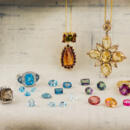
Gem in the Spotlight: Topaz
… of 8. Mohs hardness is a standardized metric of how difficult it is to scratch something. For reference, topaz is a bit softer than diamond which is a 10 and corundum (sapphire/ruby) which is a 9 on the scale. It is a bit harder than emerald at 7.5-8 and quartz which comes in at 7. Here are some more gemological stats for reference: Refractive index: 1.619 to 1.627 Birefringence: 0.008 to 0.010 Specific gravity: 3.53 Mohs Hardness: 8 Care and Cleaning Even though it’s …
-
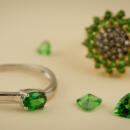
Gem in the Spotlight: Tsavorite Garnet
… in East Africa in the 1960s changed the jewelry world. Here was a gem with the color to rival the most exquisite emeralds and the clarity of the cleanest sapphires, all with the time tested durability of garnet. Tsavorite is a unique form … stones are below two carats. By some estimates, Tsavorite is around 200 times rarer than the much better known Emerald. Gemology Tsavorite’s rarity and beautiful green color reminds one of the other green garnet called Demantoid. Demantoid…
-
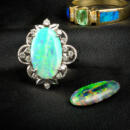
Gem in the Spotlight: Opal
…enhancing one’s eyesight. Pliny, a prominent Roman scholar in the first century AD, eloquently described opal like this: “For in them you shall see the living fire of the ruby, the glorious purple of the amethyst, the sea green of the emerald, all glittering together in an incredible mixture of light.” During the Middle Ages, opal gained an interesting reputation for preserving blonde hair and was believed to lose its luster in the presence of illness, particularly the …
-
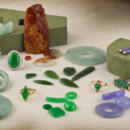
Gem in the Spotlight: Jade
… green. Jadeite can come in many different colors including pink, purple (often called lavender jade), blue, black, white, and the most valuable/desirable color: a vibrant green. The finest of all green jadeite colors is a saturated emerald green that is almost transparent, and it is called “Imperial Jade.” Jade is one of the top selling gems in Asia, but its beauty and cultural importance have landed it a spot as one of the most important items in the global gem market. …
-
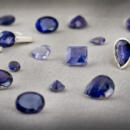
Gem in the Spotlight: Iolite
… natural color of the stone when it was first discovered. Coming in at 7 to 7.5 on the Mohs hardness scale, iolite is a somewhat soft gem. It is comparable to quartz (Amethyst, Citrine, etc), a little harder than Opal, and softer than Emerald or Topaz. Because of this, some extra care should be taken with your iolite jewelry. Try to avoid wearing it in situations where it might be hit against hard objects to keep it free from cracks and small chips. Iolite is a fairly …
-
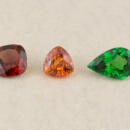
Gem in the Spotlight: Garnet
…shape and color of pomegranate seeds. Garnet is really a group of gemstones. The pyrope, almandine and spessartite are the red – brown to orange sometimes with a tint of violet varieties. The grossular, demantoid and uvarovite are the Emerald green to yellow type. Garnets are beautiful and widely diverse gemstones
-
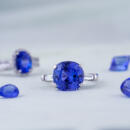
Gem in the Spotlight: Tanzanite
… rarity and dynamic look, tanzanite is still less in price than more commonly known gems like rubies, sapphires, and emeralds. Gemology of Tanzanite Gemologists refer to this gem as blue zoisite. The vast majority (current estimates are …Tanzanite has a Moh’s hardness of 6-7, making it about the same hardness as quartz, softer than ruby, sapphire and emerald and hard than opal. Tanzanite has a refractive index of 1.69-1.70. History and Lore of Tanzanite Tanzanite was …
-
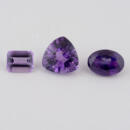
Gem in the Spotlight: Amethyst
… are an ability to quicken the intelligence, make the owner more successful in business, protect soldiers, assure victory, help hunters, guard against contagious diseases, and control evil thoughts. Amethyst was once as valuable as emeralds and rubies until very large deposits were found in multiple places around the world. Heavily increased supply dropped prices consistently over the last 200 years which is why, despite its beauty, amethyst is such an affordable stone …
-
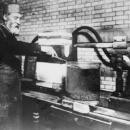
How Are Lab Grown Diamonds Made?
…. Diamonds are a crystalline form of carbon, and so making artificial carbon crystal was the problem of lab grown diamonds. For decades, manufacturers of synthetic gemstones tried growing diamonds like they grew rubies, sapphires, and emeralds. It failed. Then they had the idea to grow diamonds in the lab like they grew in nature. High Pressure High Temperature Diamonds How does nature form diamond crystals? Nature does it very deep underground. Diamond growing naturally …
