Search Results
Fine Jewelry University Articles matching: “green tourmaline”
Showing only FJU Article results. Click here to show all results.
Fine Jewelry University (Show All FJU Articles)
-
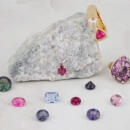
Gem in the Spotlight: Spinel
… shadows and be appreciated in its own right, and we can see why. Its colors rival even the best rubies, sapphires, tourmalines, and other more popular gems. For only the 3rd time in the last one hundred years, the industry is modifying the … easily it can be created in a lab, synthetic spinel has been used to imitate many other gemstones (ruby, sapphire, tourmaline, zircon, etc.). In fact, the ubiquity of synthetic spinel may be part of the reason why most people have been slow to…
-
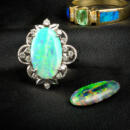
Gem in the Spotlight: Opal
…packed together, you will get different colors. Opals can display just about every color of the rainbow, but hues of green and blue are the most common. Typically the higher end opals have a darker body color, and a wide range of colors. … treatment. Opals can also sometimes be dyed, giving them an unnatural but fascinating body color such as a vibrant green or pink. Some opals that have cracked can sometimes be reused by making “mosaic opals” gluing smaller broken pieces …
-
Gem in the Spotlight: Aquamarine
…very pale blue to a deep blue, the finest specimens being the deepest in color. Most aquamarine stones have a subtle green component, and in some markets, a deep greenish blue is the most desirable. Brazil is the most prolific supplier of … See More Aquamarine » Aquamarine is more than March’s birthstone. Its beauty is in its purity of color. The blue green hue is not overpowering but an understated appeal. It has an elegance and subtlety that is lost with more vibrant …
-
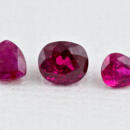
Gem in the Spotlight: Ruby
… of Sanskrit. Rubies get their name from the Latin word “ruber,” which means red. This is also where rubellite tourmaline (the red variety of tourmaline) gets its name. Pliny the Elder mentioned rubies in his work Natural History, including …
-
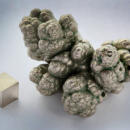
What to Do When Your Ring Irritates Your Skin
… can begin hours or even days after contact and may last for several weeks. Some people’s skin even turns black or green when they wear certain jewelry. One of the most common metal allergies is Nickel which is added to pure gold in many … necessarily allergies. For example, copper or metals that contain copper (like bronze) can cause the skin to turn green where the metal comes in contact with it. This isn’t an allergic reaction but a simple discoloration on top of the …
-

Gem in the Spotlight: Topaz
… shades is available from light Sky Blue to dark London Blue. Topaz is also found in less commonly known colors like green, pink, and purple. Imperial Topaz is by far the most valuable variety, while colorless topaz is often the least … and the gem ruined very easily. Mystic topaz comes in virtually any color from sunset orange, to violet, to green. These coatings can allow topaz to be any color of your preference. Topaz itself is a hard gemstone with a Mohs hardness of …
-
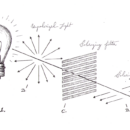
The Magic of Polarized Light
…due to their unique chemical structure, actually polarize light themselves. These gems are doubly refractive (DR) and they will split incoming light in multiple directions. Some common examples of doubly refractive gems are sapphire, tourmaline, and moissanite. These are contrasted with singly refractive (SR) gems like diamond that only bend light in one direction. Gemologists use the term birefringence to refer to how doubly refractive a particular gem is. By far the most …
-
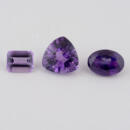
Gem in the Spotlight: Amethyst
…, but it can also be found in smaller deposits in other countries such as Russia, the United States, and Canada. Amethyst is known for its durability with a Mohs hardness rating of 7. For reference, amethyst is roughly as hard as tourmaline, softer than sapphire and topaz, and harder than opal and tanzanite. This makes it a durable gemstone that is resistant to scratching and chipping. It is also resistant to heat and chemicals which means that it can withstand daily wear and…
-
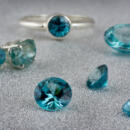
Gem in the Spotlight: Blue Zircon
…, and flashes of color or fire just like diamond. Zircon also is known for its variety of colors. Blue zircon is the most popular color. But, zircon can be almost any color you can imagine including red, yellow, orange, brown, green, champagne, golden, saffron, and colorless. Zircon colors are pure and have that distinctive fire that sets it apart from other gems. The Gemology of Zircon Why does zircon have so much more fire then other colored gems? Zircon has a high …
