Search Results
Fine Jewelry University Articles matching: “is 14K G S pure 14 K gold”
Showing only FJU Article results. Click here to show all results.
Fine Jewelry University (Show All FJU Articles)
-
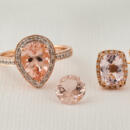
Gem in the Spotlight: Morganite
… it from other pink gemstones. Morganite is commonly heat treated to remove yellow and orange hues and to achieve a purely pink stone. This type of enhancement has an excellent stability rating, and the stone requires no special treatment…As you may know, the most important factor in determining the value of a colored gemstone is: color. Morganite of a pure, medium pink color is the most valuable. If the pink color is too light the stone often looks washed out and if the …
-
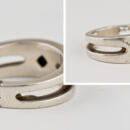
Jewelry Solder: What You Should Know
… is a new molecule that does not have the same color properties as the old one which leads to discoloration. Unlike pure gold, base metals are not nearly as resistant to tarnishing. These metals can easily have those chemical reactions …Solder is the unseen “glue” that holds most jewelry together. If you have ever had a ring sized, a chain repaired, or your … in action. But, what is solder and how is it different than the rest of the metal that makes up your jewelry? What is Solder? To answer this question we first have to understand metal alloys. If you haven’t already, now would be a …
-
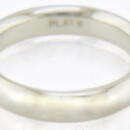
Platinum
…rings, wedding bands and anniversary rings made in platinum symbolize the everlasting endurance of love. Platinum is pure, an expression of integrity, a reflection of inner truth. Platinum’s purity endows it with a brilliant white luster…Everything you ever wanted to know (and more) about Platinum and its use in jewelry. Platinum is one of the rarest and most durable precious metals. Platinum’s rich, white luster enhances the brilliance and will … metals which can, in time, turn yellow or tarnish. Platinum belongs to the noble and precious metals family. It is resistant to tarnishing and discoloration due to chlorine and other chemicals. These factors, along with its strength …
-
Caring for and Cleaning Your Jewelry
…. Hardness is related to the Mohs hardness scale. Diamond is the hardest at 10. Talc is listed as 1 the softest. Pure gold (24 karat) is Mohs 2.5, 14 and 18 karat list at Mohs 3. Platinum list at Mohs 4.33. Sterling silver list at Mohs 2….How to Clean Jewelry A diamond’s spectacular beauty is due to its light show. Diamonds make light reflect, show its many colors, and dazzle. To perform its magic the … show. Dust and dirt stick to the grease and oils creating a lifeless diamond. Cleaning your diamond jewelry at home is simple and rewarding. Use a soft toothbrush and mild soap then rinse thoroughly with warm water. The key to diamond …
-
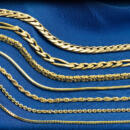
Types of Necklace Chains
…. CONS Durability – The high karat gold that is traditionally used in baht chains is softer than gold alloys like 14k and 18k. This can make it easier for these chains to bend out of shape. Bismark Chain The bismark chain is in the …The chain is one of the most fundamental pieces of jewelry that exists. It can simply be the thing you use to wear your pendants… everyday and not think twice about it, or it can be your most treasured piece of jewelry. But, what kind of chain is best for you? In this article we’ll introduce you to the staggering variety of necklace (and bracelet) chains that are…
-
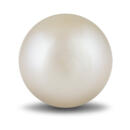
Gem in the Spotlight: Pearl
… in a range of colors, from white to black, with many shades in between. The most valuable pearls are those with a pure, even color, such as white, pink, or silver. Luster: Luster is the intensity of light reflected from a pearl’s surface…Pearls have captured the imagination and adoration of people from diverse backgrounds throughout history. They are both simple and infinitely complex. Let’s explore the science, history, and lore surrounding this most… Pearls Formed? Pearls are formed when a foreign object enters the shell of a mollusk and irritates the soft mantle tissue within. In response to the irritant, the mollusk secretes a substance called nacre to coat the object and protect…
-
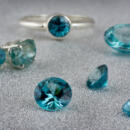
Gem in the Spotlight: Blue Zircon
… imagine including red, yellow, orange, brown, green, champagne, golden, saffron, and colorless. Zircon colors are pure and have that distinctive fire that sets it apart from other gems. The Gemology of Zircon Why does zircon have so much…Zircon may be last in the alphabet of gemstones, but it is first in sparkle. The crystal structure of zircon creates one of the liveliest displays found in any colored gem. In… simulates were made, the colorless version of zircon was used in jewelry to mimic diamond. Why? Natural zircon is known for its scintillation, brilliance, and flashes of color or fire just like diamond. Zircon also is known for its …
-

Gem in the Spotlight: Topaz
…s like a rainbow with all the colors at once.” And of course, all of them are right. History and Lore Topaz in its pure form is naturally colorless, clear like a diamond. The famous “Braganza Diamond” was thought to be the largest diamond… old baseball joke, “Who’s on First?” “Yes, Who’s on First…” always comes to mind when I hear people discussing Topaz. You can hear one person say, “I love Topaz; it reminds me of a blue sky.” Then her friend says back, “Topaz may be …
-

How to Tell If a Diamond Is Natural or Lab Grown
… or not it is a Type IIa diamond. Type IIa is actually a gemological variant of the diamond that relates to how pure the carbon is that makes up the diamond. In nature, less than 2% of all diamonds are Type IIa, however, most gem quality …How can I know if my diamond is real? This is a question we get all the time, and it’s not as simple as you might think. First, you have to decide … diamonds, you might want to check out our introduction to lab grown and synthetic diamonds before continuing with this article. So, now you know that lab grown diamonds are just as real as natural diamonds, but we still want to be able…
