Search Results
Fine Jewelry University Articles matching: “How to check loose stones”
Showing only FJU Article results. Click here to show all results.
Fine Jewelry University (Show All FJU Articles)
-
Jewelry Repair FAQ
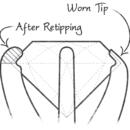
…, pearls, and more in all shapes and sizes to choose from when selecting a replacement stone for repairs. Matching stones takes a discerning eye, attention to detail, extensive gemological training, and years of experience. Of course, some …to again. What is retipping, and why do I need it? In a large number of jewelry pieces, the valuable diamonds and gemstones are held in place with prongs. With wear, the tops of these prongs can become worn down. If the prongs wear down too…
-
Anatomy of a Ring
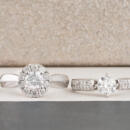
… prongs checked by a jeweler, especially if it looks to you like any of the tips are missing or worn down, or if any stones are loose. The more tips that are thin or missing, the more likely you are to lose a stone. In addition to prong …rings have been very popular for sometime and so you may be familiar with this one already. The “halo” refers to the stones that surround the center stone, or sometimes center cluster. There are many styles of halo rings. A halo can be a …
-
Gem in the Spotlight: Opal
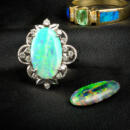
… color, and a wide range of colors. Red carries more value and is by far the rarest color that opals can display. Stones with larger patches of color are valued higher than those that display only small pins (pinfire) or no play of color at…”. Opal has a refractive index of 1.37 – 1.47 and a Mohs hardness of 5.5-6. This makes it one of the softest gemstones commonly used in jewelry. For reference, here are the Mohs hardness values for some other gemstones you may know: Diamond…
-
Frequently Asked Question about Jewelry
… Certificate and an Appraisal? A Diamond Certificate is a document issued by a Gemological Laboratory describing a Loose Diamond. The laboratory will not issue certificates on Diamonds which are set in a mounting. A Diamond Certificate … period of time, assuming the Diamond does not chip or is not otherwise altered. An appraisal can be performed on a loose Diamond, a mounted stone, or jewelry. If the stone is not loose, the physical properties are estimated using various …
-
Types of Jewelry Clasps
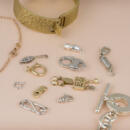
… and bracelets. The hook-and-eye clasp was also used by the Greeks and Romans who often embellished them with gemstones and intricate designs. In the 19th century, the development of new metalworking techniques and machinery led to the mass…. This is one of the reasons why they are often used on bracelets. CONS Longevity – The tongue (insert) can become loose over time and will need to be adjusted. If the tongue is made out of silver this can happen quite quickly. …
-
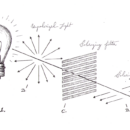
The Magic of Polarized Light
… Polarizing filters are critical to many fields of study. Without them, we wouldn’t be able to easily identify gemstones, TVs and monitors wouldn’t work in the same way, and the latest blockbuster movie wouldn’t pop off the screen the way … them to function efficiently as they do without negative side effects. Using Polarized Light in Gemology Some gemstones, due to their unique chemical structure, actually polarize light themselves. These gems are doubly refractive (DR) and …
-
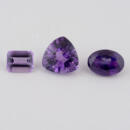
Gem in the Spotlight: Amethyst
… are now appearing in inexpensive jewelry. Because the cost of testing is higher than the cost of even the natural stones it is not often performed. Beware of stones of perfect clarity, calibrated sizes, and precision cutting. Notable …when storing your amethyst jewelry. If you have an amethyst ring or other piece of jewelry with diamonds or other gemstones, you should be careful when cleaning it. You should use a soft brush to gently scrub the amethyst and avoid using …
-
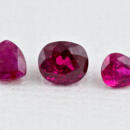
Gem in the Spotlight: Ruby
… deeper? Whatever it is, ruby’s impact on humanity is broad and deep, with arguably the richest history of all gemstones. Gemology of Ruby Rubies are in the corundum gem family along with sapphires. Corundum is an extremely durable form of … rubies and mentions them four separate times. In India, the ruby is known as “ratnaraj” or “king of precious stones” in the ancient language of Sanskrit. Rubies get their name from the Latin word “ruber,” which means red. This is also …
-
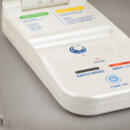
How to Tell If a Diamond Is Natural or Lab Grown
…First, you have to decide what “real” means. If you are not familiar with lab grown diamonds, you might want to check out our introduction to lab grown and synthetic diamonds before continuing with this article. So, now you know that lab … are natural diamonds that are Type IIa, so it’s not a 100% conclusive test. Also, a diamond has to be completely loose (unmounted) to perform the test. Photoluminescence Spectroscopy and UV Radiation Going beyond the Type IIa test, more …
