Search Results
Fine Jewelry University Articles matching: “Loose sapphires”
Showing only FJU Article results. Click here to show all results.
Fine Jewelry University (Show All FJU Articles)
-
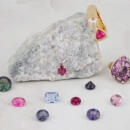
Gem in the Spotlight: Spinel
… and even today is often used as a substitute for similar looking stones. In recent years, spinel has started to move out of the shadows and be appreciated in its own right, and we can see why. Its colors rival even the best rubies, sapphires, tourmalines, and other more popular gems. For only the 3rd time in the last one hundred years, the industry is modifying the official birthstone list. Spinel will be joining peridot as the August birthstone! This change was officially …
-
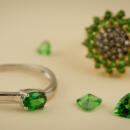
Gem in the Spotlight: Tsavorite Garnet
The discovery of Tsavorite in East Africa in the 1960s changed the jewelry world. Here was a gem with the color to rival the most exquisite emeralds and the clarity of the cleanest sapphires, all with the time tested durability of garnet. Tsavorite is a unique form of garnet with a stunningly vivid green color. It is bright and lively with a high refractive index giving it excellent sparkle and scintillation. Tsavorite is…
-
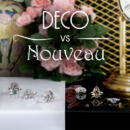
Art Deco vs. Art Nouveau Style Jewelry
…Art Deco jewelry design embraced symmetry, bold colors, and streamlined forms influenced by Cubism and the Machine Age. Precious metals like platinum and white gold alongside rare and valuable gemstones such as diamonds, emeralds, and sapphires, were the materials of choice for Art Deco jewelry makers. The most prevalent diamond cut found in Art Deco jewelry is the Old European cut, but some pieces still incorporated Old Mine cuts or transitional cuts. Design Principles Art …
-
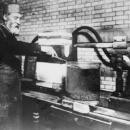
How Are Lab Grown Diamonds Made?
…quest continued. Diamonds are a crystalline form of carbon, and so making artificial carbon crystal was the problem of lab grown diamonds. For decades, manufacturers of synthetic gemstones tried growing diamonds like they grew rubies, sapphires, and emeralds. It failed. Then they had the idea to grow diamonds in the lab like they grew in nature. High Pressure High Temperature Diamonds How does nature form diamond crystals? Nature does it very deep underground. Diamond …
-
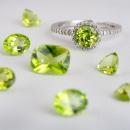
Gem in the Spotlight: Peridot
…. Do not use a home ultrasonic machine for cleaning. Instead, use warm soapy water and a tooth brush for at-home cleanings. If well cared for, Peridot jewelry can last generations. We have an excellent selection of Peridot jewelry and loose Peridot gems that we can set for you. Come by the shop to find your
-
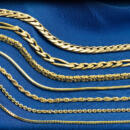
Types of Necklace Chains
…family of flat style chains, however they can be a bit more flexible than some other flat chains. They are made by interlocking and weaving links into a wide flat shape. The bismark can be made wide or thin, and it can have a tight or loose weave. These variations give bismark a wide variety of looks. Since it is a flat style of chain, pendants do not usually hang well, and theses chains are often worn on their own. PROS Bold Look – Bismark chains are usually eye …
-

How to Tell If a Diamond Is Natural or Lab Grown
… IIa test is only an indicator for the gemologist to use. There are lab grown diamonds that are not Type IIa, and there are natural diamonds that are Type IIa, so it’s not a 100% conclusive test. Also, a diamond has to be completely loose (unmounted) to perform the test. Photoluminescence Spectroscopy and UV Radiation Going beyond the Type IIa test, more advanced equipment exists that uses spectroscopic techniques to analyze gems. One such machine is the DiaTrue …
-
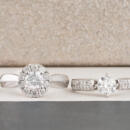
Anatomy of a Ring
… part that actually rests on top of the stone—is called the “tip.” It’s always a good idea to have your prongs checked by a jeweler, especially if it looks to you like any of the tips are missing or worn down, or if any stones are loose. The more tips that are thin or missing, the more likely you are to lose a stone. In addition to prong heads, you can also find bezel, half-bezel, and channel heads. A bezel head encircles the entire stone in metal and is possibly the …
