Search Results
Fine Jewelry University Articles matching: “Manufacturers mark”
Showing only FJU Article results. Click here to show all results.
Fine Jewelry University (Show All FJU Articles)
-
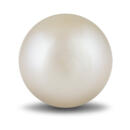
Gem in the Spotlight: Pearl
…. Natural pearls grow in the wild without human intervention. They are very rare, and most natural pearls on the market today are antique. They can take years, even decades, to form, and are found only in a few select locations around the… who believed it to be a talisman of good luck. Types of Pearls There is a huge variety of pearls available on the market today. This section will give you just a small sampling of the different kinds of pearls that you may run into. …
-
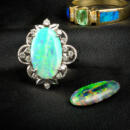
Gem in the Spotlight: Opal
… proper care opals can last for generations. Opals have very high water content, typically hovering around the 5-10% mark. As opals dry out over time they can sometimes crack at the surface, which is called crazing. As of this writing …brown ironstone from Australia. This concludes our journey through the enchanting world of opal. Its rich history, remarkable optical properties, and wide range of varieties make opal one of the most exciting gems you can own today. If …
-
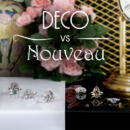
Art Deco vs. Art Nouveau Style Jewelry
… of jewelry design. Art Nouveau jewelry celebrates nature’s beauty with flowing forms and intricate details, and Art Deco jewelry epitomizes the modern era’s sophistication and geometric precision. Both styles have left an indelible mark on the world of jewelry, continuing to inspire designers and collectors alike with their timeless elegance and innovative craftsmanship. Whether you’re drawn to the organic allure of Art Nouveau or the bold symmetry of Art Deco, we at …
-
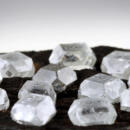
Is a Lab Grown Diamond Right for Me?
… school physics?). Even more unfortunately, the diamond industry suffers from a lot of misinformation and paranoia both from inside the trade and from outside observers. I have heard people say that natural diamonds come with a 400% mark up, or that most mined diamonds are conflict diamonds (both wild falsehoods). On the other hand, I have heard some in the industry refer to lab grown diamonds as fakes (also completely false). We’re here to help cut through some of the …
-
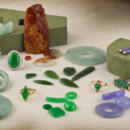
Gem in the Spotlight: Jade
…, but its beauty and cultural importance have landed it a spot as one of the most important items in the global gem market. In fact, jadeite is often sold by the individual piece instead of by weight like most gems. This is because even …If you scraped them together, a diamond would scratch a piece of jade while the much softer jade wouldn’t leave a mark on the diamond. However, if you decided to smack both gems with a hammer (please don’t try this at home), the diamond …
-

How to Sell Your Jewelry
… service for a fee. Think of a jewelry broker as a hired professional working for you against a very sophisticated market like the jewelry industry. Make sure their allegiance is to you alone. Most jewelry brokers are highly trained in … of jewelry. Also realize that the prices asked for in the paper are rarely achieved and do not reveal the true market value. Some times the jewelry is sold for very much less then advertised or never sold at all. But with some safeguards…
-
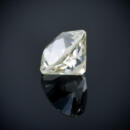
The History of Diamond Cuts
… but did not have the technology to change their shape. So, the Romans wore uncut diamonds. One of diamond’s remarkable attributes is that the natural diamond crystal is beautiful without any human modification. Diamonds normally form in … or almost the same diamond cut can be known by different names. This is done in the modern era is for branding and marketing reasons to increase the perceived value of the diamond. In historical times, it was most likely for national and…
-
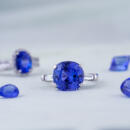
Gem in the Spotlight: Tanzanite
… amount of blue in a tanzanite is caused by the quantity of vanadium present. Raw, unheated tanzanite is sometimes marketed as “mermaid tanzanite” because of the iridescent blue and green colors. You can usually tell if a tanzanite has …VP of Tiffany & Co. at the time, who named the stone tanzanite after the country of origin. Tiffany then started marketing the stone around 1968. The geological conditions required to form tanzanite are quite rare, leading some …
-
Fake Diamonds: The Great Diamond Attack
… to justify using them. The technology is becoming more cost effective, and some synthetic diamonds are entering the market place now. Since they are the same chemistry as natural diamond, there is no easy test to use to separate them … diamond suppliers have sophisticated equipment in place to help them catch these impostors before they reach the marketplace. If you’re interested you can learn more about how to tell if a diamond is lab grown . Synthetic gems are not …
