Search Results
Fine Jewelry University Articles matching: “blue sapphires”
Showing only FJU Article results. Click here to show all results.
Fine Jewelry University (Show All FJU Articles)
-
Jewelry Repair FAQ
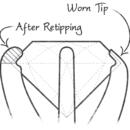
… way it did before a gemstone fell out; who wouldn’t? That’s why we have literally 100s of carats of loose diamonds, sapphires, rubies, opals, pearls, and more in all shapes and sizes to choose from when selecting a replacement stone for …by the jeweler’s torch. However, with our laser welder we are able to retip prongs next to many gemstones (diamonds, sapphires, and rubies for example) without removing them, saving you time and money. Can my costume and fashion jewelry be …
-
Synthetic Gems: The Whole Story
… beautiful gems and very rare in their stunning beauty. These four gems have been coveted by rulers and the rich for thousands of years. But, what if anyone could own them? At gem shows and museums, I have seen jaw dropping rubies, sapphires and emeralds. These gems in high quality have put ownership beyond most people to justify the price. Just a one carat gem could cost $3,000 and more. Most of the time people don’t wear them as an engagement ring where people can spend …
-
How Are Lab Grown Diamonds Made?
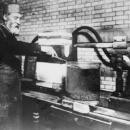
… lab grown diamonds. For decades, manufacturers of synthetic gemstones tried growing diamonds like they grew rubies, sapphires, and emeralds. It failed. Then they had the idea to grow diamonds in the lab like they grew in nature. High Pressure… gems. This is because even the smallest presence of nitrogen or boron during the process can result in a yellow or blue color respectively. Both HPHT and CVD diamonds tend to exhibit strong and unusual fluorescence characteristics when …
-
Gem in the Spotlight: Spinel
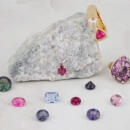
… out of the shadows and be appreciated in its own right, and we can see why. Its colors rival even the best rubies, sapphires, tourmalines, and other more popular gems. For only the 3rd time in the last one hundred years, the industry is … of all time. Spinel was first made in a lab over 100 years ago when scientists who were trying to synthesize blue sapphire wound up creating spinel by mistake. Since then many processes have been used and perfected to create spinel in …
-
Art Deco vs. Art Nouveau Style Jewelry
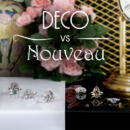
…Art Deco jewelry design embraced symmetry, bold colors, and streamlined forms influenced by Cubism and the Machine Age. Precious metals like platinum and white gold alongside rare and valuable gemstones such as diamonds, emeralds, and sapphires, were the materials of choice for Art Deco jewelry makers. The most prevalent diamond cut found in Art Deco jewelry is the Old European cut, but some pieces still incorporated Old Mine cuts or transitional cuts. Design Principles Art …
-
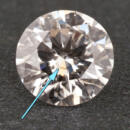
What Are Lab Grown Diamonds?
…nature, a fake (in fact it is a beautiful and highly valuable gem). But if it is being sold as a diamond, it becomes a fake. Most gem simulants are trying to imitate diamonds, but there are also simulants for other valuable gemstones (sapphires, rubies, etc.). Here are some of the more popular diamond simulants. Synthetic Rutile was introduced in the late 1940s and used as an early diamond simulant. Next on the man-made diamond simulant play is Strontium Titanate . This …
-
Gem in the Spotlight: Tsavorite Garnet
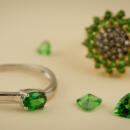
The discovery of Tsavorite in East Africa in the 1960s changed the jewelry world. Here was a gem with the color to rival the most exquisite emeralds and the clarity of the cleanest sapphires, all with the time tested durability of garnet. Tsavorite is a unique form of garnet with a stunningly vivid green color. It is bright and lively with a high refractive index giving it excellent sparkle and scintillation. Tsavorite is…
-
Gem in the Spotlight: Alexandrite
… most wavelengths of light very well, only transmitting green and red light. This means that depending on the light source the stone will reflect more of the accent colors of light. Since fluorescent light has a stronger greenish-blue component, the stone appears greener. Under candlelight, which has a much stronger red/orange component, the stone will appear redder. Alexandrite has a refractive index of 1.746-1.755 with an average birefringence of .010. It has a …
-
Gem in the Spotlight: Opal
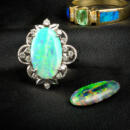
…, you will get different colors. Opals can display just about every color of the rainbow, but hues of green and blue are the most common. Typically the higher end opals have a darker body color, and a wide range of colors. Red carries … orange body color, many of these stones have little to no play of color. The best stones have strong greens and blues that flash through the orange body color. Boulder Opal: Boulder opals are gem opal material that still incorporates …
