Search Results
Fine Jewelry University Articles matching: “diamond replacement”
Showing only FJU Article results. Click here to show all results.
Fine Jewelry University (Show All FJU Articles)
-
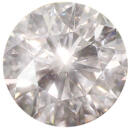
Diamond Buying Guide: The 4 C’s
If you understand how diamonds are graded, you have a better chance of finding the right one for you. At Arden Jewelers, our gemologists are more …have so please feel free to visit us anytime. Carat Weight Diamonds are small, so the scale that is used to describe diamond weights uses very small units. A carat equals 1/5 of one gram. A carat is divided into 100 points. A diamond can be … 3/4 of a carat. It is a good practice to know the exact weight of a diamond when buying or selling. The weight of a diamond is often thought of in terms of its size. If you know that you like the look of a 1 carat, for example, you can use …
-
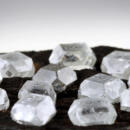
Is a Lab Grown Diamond Right for Me?
Picking a diamond for your engagement ring is a big decision. For most of us, buying a diamond is a significant financial undertaking… don’t have (anyone remember their refractive indexes from high school physics?). Even more unfortunately, the diamond industry suffers from a lot of misinformation and paranoia both from inside the trade and from outside observers. I have … conflict diamonds (both wild falsehoods). On the other hand, I have heard some in the industry refer to lab grown diamonds as fakes (also completely false). We’re here to help cut through some of the rhetoric, so you can make an informed …
-
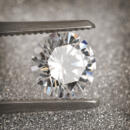
Diamond Brokering
Serving you is our passion. Making our expertise available to you coupled with our value hunting system makes the diamond buying experience a positive one. Please feel free to ask any questions and explore what we can do for you. Using a … you through your diamond purchase insures the mastery of the minute details in diamond evaluations. Did you know diamonds of the same grade could be thousands of dollars different in price? A subtle difference in a diamond impacts the price…
-
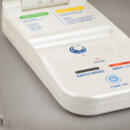
How to Tell If a Diamond Is Natural or Lab Grown
How can I know if my diamond is real? This is a question we get all the time, and it’s not as simple as you might think. First, you have to … are not familiar with lab grown diamonds, you might want to check out our introduction to lab grown and synthetic diamonds before continuing with this article. So, now you know that lab grown diamonds are just as real as natural diamonds, …comes to diamond simulants like Cubic Zirconia (CZ) or Moissanite, it is easy to identify them because they aren’t diamonds. But, with lab grown diamonds, the chemical structure and properties are all the same as natural diamond, so it …
-
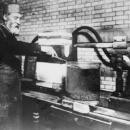
How Are Lab Grown Diamonds Made?
The dream of making a beautiful and valuable diamond from simple carbon has long captivated the imagination of scientists and visionaries alike. Just like the alchemists…, many have tried to achieve this impressive feat. We have only recently been able to produce gem quality, lab grown diamonds that are large enough to be used in jewelry. But, how is it done? Early Efforts Throughout history, many people …. Henri Moissan was one of the early pioneers in the field. In 1893, he claimed to have successfully made a diamond by heating charcoal to 3,500 degrees Celsius inside a carbon crucible. Many attempts were made to reproduce his techniques …
-
Frequently Asked Question about Jewelry
… industry is staggering. What is Moissanite? Moissanite is lab-created silicon carbide. It has become an excellent diamond imitation since it gives a positive reading on a thermal inertia testers (diamond testers). Some people use this … diamond buyer out of their money. What is the difference between a Diamond Certificate and an Appraisal? A Diamond Certificate is a document issued by a Gemological Laboratory describing a Loose Diamond. The laboratory will not issue …
-

What are “Blood Diamonds”?
Conflict diamonds are diamonds illegally traded to fund conflict in war-torn areas, particularly in central and western Africa. The … action in opposition to those governments, or in contravention of the decisions of the Security Council.” These diamonds are sometimes referred to as “blood diamonds.” In July 2000, the global diamond industry made clear to the … the Kimberley Process Certification System. This system was formally adopted in 2003 and guards against conflict diamonds entering the legitimate diamond supply chain. The diamond industry also adopted a voluntary System of Warranties to …
-
Caring for and Cleaning Your Jewelry
How to Clean Jewelry A diamond‘s spectacular beauty is due to its light show. Diamonds make light reflect, show its many colors, and dazzle. To … and lotions add a coating that stops the light show. Dust and dirt stick to the grease and oils creating a lifeless diamond. Cleaning your diamond jewelry at home is simple and rewarding. Use a soft toothbrush and mild soap then rinse … key to diamond cleaning is the underneath side or pavilion. The light needs a clean surface to bounce upward. The diamond may need to be scrubbed several times before all the build up is removed. Some don’ts of jewelry cleaning. Never use …
-
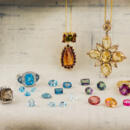
Gem in the Spotlight: Topaz
…ht. History and Lore Topaz in its pure form is naturally colorless, clear like a diamond. The famous “Braganza Diamond” was thought to be the largest diamond ever found (prior to the Cullinan Diamond) at 1,680 carats and was set in the Portu… to put coatings on lenses for glasses and cameras. It is also one of the processes that is used to create lab grown diamonds . A thin, multi-colored film is bonded on the surface of colorless topaz to create all the colors you see in Mystic…
