Search Results
Fine Jewelry University Articles matching: “Butterfly pendant shapes”
Showing only FJU Article results. Click here to show all results.
Fine Jewelry University (Show All FJU Articles)
-
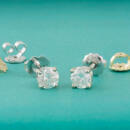
Styles of Earring Backs
… simply interested in expanding your general jewelry knowledge. Keep reading; we have your answers. Friction Backs (Butterfly Backs) Also called “butterfly backs,” and sometimes “push backs.” These are undoubtedly the most common style of …
-
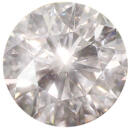
Diamond Buying Guide: The 4 C’s
… all describe the shape of the diamond. Checkout the picture above to see examples of the most popular diamond shapes. There are many more shapes than we can list here and there are even variations on the common shapes with more facets or …. When you are choosing a diamond shape, keep in mind that different shapes have different light properties. Some shapes, like round, are especially good at returning light to the viewer which makes them sparkle more than other shapes. The …
-
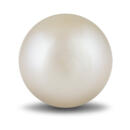
Gem in the Spotlight: Pearl
… and appearance. Mabe pearls are typically used in jewelry designs that require a flat surface, such as earrings, pendants, and rings. Seed Pearls: These are very small pearls, typically less than 2mm in diameter, that are so named because … by which they are created is completely unpredictable, and as a result, natural pearls come in a wide range of shapes, sizes, and colors. They are typically irregular in shape and have a unique, organic beauty. Cultured pearls are created …
-
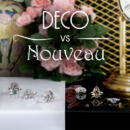
Art Deco vs. Art Nouveau Style Jewelry
…In contrast, Art Deco arrived in the 1920’s and 1930’s, characterized by its celebration of modernity, geometric shapes, and luxurious materials. The opulence and optimism of The Roaring 20’s formed the perfect backdrop for this new kind of… to symmetry and balance. Organic Forms: Art Nouveau jewelry features sinuous, curving lines that mimic natural shapes such as vines, flowers, and insects. Asymmetry is very common. Symbolism: Often imbued with symbolism and allegory, Art …
-
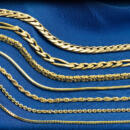
Types of Necklace Chains
… chain is one of the most fundamental pieces of jewelry that exists. It can simply be the thing you use to wear your pendants, or it can make a statement all by itself. You can wear one everyday and not think twice about it, or it can be …, cable chains can easily be worn on their own or layered with other chains. They are also a great option for pendants because they are flexible and don’t often snag the pendant bail. They are also relatively strong to support the weight of …
-
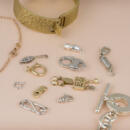
Types of Jewelry Clasps
…-rounded clasp that is relatively inexpensive, strong, and easy to use. They come in a huge variety of styles and shapes including the traditional oblong shape, hearts, teardrops, specialty designer styles, and more. They have a simple … you might thing this style of clasp is something like a sideways box clasp. Indeed, some box clasps do come in shapes like this, but the fish hook clasp works slightly differently. The tongue of the clasp is first threaded through the …
-
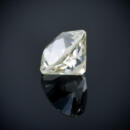
The History of Diamond Cuts
… round. Some call the irregular shape cut a crude Old Mine cut. Old Mine cut is the last cut where individual cutters took liberty with how the facets are laid out. Some look like a modern round brilliant (in layout, not in angles or shapes) and others follow a design of their own creation. The Old European cut is the forerunner of the modern Brilliant Cut. The 58 facets have the same general shape, angle and layout as the modern brilliant cut. The old European cut is …
-
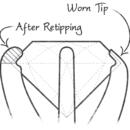
Jewelry Repair FAQ
… question all the time. People want their jewelry to look just the way it did before a gemstone fell out; who wouldn’t? That’s why we have literally 100s of carats of loose diamonds, sapphires, rubies, opals, pearls, and more in all shapes and sizes to choose from when selecting a replacement stone for repairs. Matching stones takes a discerning eye, attention to detail, extensive gemological training, and years of experience. Of course, some gems are more difficult to …
-
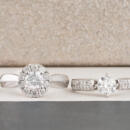
Anatomy of a Ring
… very popular for sometime and so you may be familiar with this one already. The “halo” refers to the stones that surround the center stone, or sometimes center cluster. There are many styles of halo rings. A halo can be a variety of shapes and contain different cuts of stones. There can even be multiple halos forming concentric circles around the center stone. The metal on the outside of the halo that holds in the accent stones (typically small beads) is prone to wear …
