Search Results
Fine Jewelry University Articles matching: “Lab created engagement ring”
Showing only FJU Article results. Click here to show all results.
Fine Jewelry University (Show All FJU Articles)
-
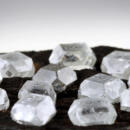
Is a Lab Grown Diamond Right for Me?
Picking a diamond for your engagement ring is a big decision. For most of us, buying a diamond is a significant financial undertaking, and we want to get …prices. P. S. If you are considering a lab grown diamond, be sure to checkout Balance , our own collection of unique engagement rings made exclusively … are conflict free, and you can buy verifiable Canadian diamonds of known origin if you want), it is still reassuring to know that with lab grown diamonds, you can be totally confident that your diamond did not support wars or child labor…
-
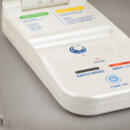
How to Tell If a Diamond Is Natural or Lab Grown
… and GIA (the Gemological Institute of America) have developed even more complex and sophisticated machines for answering this question. They have imaginative names like DiamondCheck, DiamondSure, and DiamondView. Roughly speaking, these …’s not as simple as you might think. First, you have to decide what “real” means. If you are not familiar with lab grown diamonds, you might want to check out our introduction to lab grown and synthetic diamonds before continuing with …
-
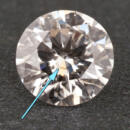
What Are Lab Grown Diamonds?
… are man-made crystals with the same crystal structure and chemical composition as the specific gem that is being created. Therefore, a “synthetic diamond” has the same crystal structure and chemical composition as a natural diamond. The … lab grown diamond stem from how they were made. Lab grown diamonds are man-made in a lab while natural diamonds are created in the earth. Nature is not a controlled, sterile environment, and natural processes vary abundantly. Therefore, the…
-

How Are Lab Grown Diamonds Made?
… formation are naturally found. We see diamonds closer to the surface of the earth when a rare type of deep volcano brings them up to where humans can find and mine them. The first successful synthetic diamonds were made by mimicking … very high pressure and temperature to grow the diamond. The 10.02ct HPHT Diamond Made by NDT. Thanks to IGI for sharing this video. The GE invention of the belt press uses an upper and lower anvil to generate pressure over 1.5 million …
-
Fake Diamonds: The Great Diamond Attack
… all say that they were someone and the contestant would try to find out who was the real person. Technology has created many new diamonds and diamond lookalikes. “What is a real diamond?” is a difficult question these days. And the problem … likes. Modern science has developed a man made gem that can fake out the standard diamond tester. Moissanite is lab–created, silicon carbide, and it gives a positive reading on a diamond tester. But science fights back with a Moissanite …
-
Gem in the Spotlight: Spinel
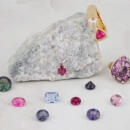
… and perfected to create spinel in even more colors than it is naturally found in. Because of how easily it can be created in a lab, synthetic spinel has been used to imitate many other gemstones (ruby, sapphire, tourmaline, zircon, etc.). … of the reason why most people have been slow to appreciate natural spinel in its own right. Interestingly, most lab–created spinel has a slightly higher refractive index than natural spinel, and that, along with inclusions can be used to …
-
Gem in the Spotlight: Pearl
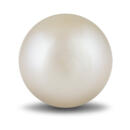
…even decades, to form, and are found only in a few select locations around the world. The process by which they are created is completely unpredictable, and as a result, natural pearls come in a wide range of shapes, sizes, and colors. They … natural irritant. The resulting pearl is virtually indistinguishable from a natural pearl in appearance, and can be created in a fraction of the time. Because of this, cultured pearls are far more common and affordable than natural pearls. …
-
Understanding the Diamond Buying Game
… this is not always the case. Today, to make the grading standard more uniform, diamond certification by grading laboratories is thought to make diamonds a commodity. Again the dream is not the reality. The nature of diamonds is that … diamond is unique. Diamond reports don’t tell the whole story. First, it is well known that not all diamond grading labs grade with the same standard. GIA and AGS use the most technical standards. EGL uses a looser grading standard, I …
-
Frequently Asked Question about Jewelry
…SI3 grades. What is a Comfort Fit Ring? Many diamond wedding rings are available in a comfort-fit style. Comfort-fit engagement rings have extra metal to make the inside of the band slightly domed, resulting in a very comfortable fit. Comfort-… in a more comfortable fit. This might result in the feeling that the ring feels “looser” in the finger. Diamond engagement rings with a comfort fit design have an oval cross section with very smooth rounded edges, giving them the comfort-fit …
