Search Results
Fine Jewelry University Articles matching: “Lab grown emeralds”
Showing only FJU Article results. Click here to show all results.
Fine Jewelry University (Show All FJU Articles)
-

How to Tell If a Diamond Is Natural or Lab Grown
… not as simple as you might think. First, you have to decide what “real” means. If you are not familiar with lab grown diamonds, you might want to check out our introduction to lab grown and synthetic diamonds before continuing with this … like Cubic Zirconia (CZ) or Moissanite, it is easy to identify them because they aren’t diamonds. But, with lab grown diamonds, the chemical structure and properties are all the same as natural diamond, so it becomes much more difficult …
-
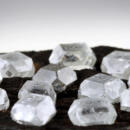
Is a Lab Grown Diamond Right for Me?
… are conflict diamonds (both wild falsehoods). On the other hand, I have heard some in the industry refer to lab grown diamonds as fakes (also completely false). We’re here to help cut through some of the rhetoric, so you can make an … and logical decision about what kind of diamond is right for you. First of all, if you’re not sure what a lab grown or synthetic diamond is, please check out our basic introduction to lab grown diamonds before reading on. So, how should …
-
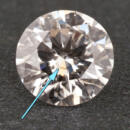
What Are Lab Grown Diamonds?
In the simplest terms, lab grown diamonds are diamonds that have been made by people instead of mined out of the earth. If it’s so simple, you might …below this sentence. The complexity arises from the fact that lots of different terms have been used to describe lab grown diamonds and their cousins, and not everyone uses these terms in the same way. So, let’s begin with some vocabulary… what the term “synthetic” means, and it’s why most producers of man-made diamonds prefer the term “lab grown” over “synthetic.” In order to appreciate this fully, it helps to understand a little bit about how lab grown diamonds are made. …
-
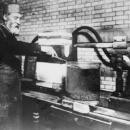
How Are Lab Grown Diamonds Made?
…. For decades, manufacturers of synthetic gemstones tried growing diamonds like they grew rubies, sapphires, and emeralds. It failed. Then they had the idea to grow diamonds in the lab like they grew in nature. High Pressure High Temperature … gold, many have tried to achieve this impressive feat. We have only recently been able to produce gem quality, lab grown diamonds that are large enough to be used in jewelry. But, how is it done? Early Efforts Throughout history, many …
-
Fake Diamonds: The Great Diamond Attack
… origin. It can be done well with careful observation. Keep in mind, however, that the vast majority of lab grown or synthetic diamond producers responsibly disclose that their diamonds are man-made. Many of them even laser inscribe the … before they reach the marketplace. If you’re interested you can learn more about how to tell if a diamond is lab grown . Synthetic gems are not new to the jewelry profession. Synthetic colored stones have been around for over a 100 years…
-
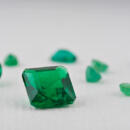
Gem in the Spotlight: Emerald
… has been revered for over 4,000 years and is associated with love, fertility, and rebirth. Gemology of Emerald Emeralds are a member of the beryl mineral family (along with morganite and aquamarine) and are valued for their rich green color… a moderately refractive gemstone. Its specific gravity ranges from 2.65 to 2.75. One of the distinctive features of emeralds is that they often contain inclusions. Sometimes these inclusions are referred to as jardin (the French word for …
-
Synthetic Gems: The Whole Story
… years. But, what if anyone could own them? At gem shows and museums, I have seen jaw dropping rubies, sapphires and emeralds. These gems in high quality have put ownership beyond most people to justify the price. Just a one carat gem could … synthetics are so well made it is impossible to id them in jewelry and can only be positively identified in gem labs with millions of dollars worth of equipment and world class personnel. Synthetic diamonds on the high end and synthetic…
-
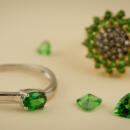
Gem in the Spotlight: Tsavorite Garnet
The discovery of Tsavorite in East Africa in the 1960s changed the jewelry world. Here was a gem with the color to rival the most exquisite emeralds and the clarity of the cleanest sapphires, all with the time tested durability of garnet. Tsavorite is a unique form of garnet with a stunningly vivid green color. It is bright and lively with a high refractive index giving it …
-
Art Deco vs. Art Nouveau Style Jewelry
… Machine Age. Precious metals like platinum and white gold alongside rare and valuable gemstones such as diamonds, emeralds, and sapphires, were the materials of choice for Art Deco jewelry makers. The most prevalent diamond cut found in Art … symmetry, bold contrast, simplicity Materials of Choice Silver, semi-precious stones, enamel Platinum, diamonds, emeralds Prominent Designers Louis Comfort Tiffany Cartier, Van Cleef & Arpels Main Diamond Cut Old Mine Cut Old European …
