Search Results
Fine Jewelry University Articles matching: “Round cut spilt shank”
Showing only FJU Article results. Click here to show all results.
Fine Jewelry University (Show All FJU Articles)
-
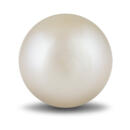
Gem in the Spotlight: Pearl
Pearls have captured the imagination and adoration of people from diverse backgrounds throughout history. They are both simple and infinitely complex. Let’s explore the science, history, and lore … a substance called nacre to coat the object and protect itself. Over time, layer upon layer of nacre is deposited around the irritant, eventually forming a pearl. This process can occur naturally or via human intervention. Natural pearls … market today are antique. They can take years, even decades, to form, and are found only in a few select locations around the world. The process by which they are created is completely unpredictable, and as a result, natural pearls come …
-
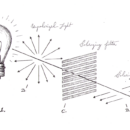
The Magic of Polarized Light
… Is Polarized Light? Light from almost any light source travels in many different directions, and the vibrations around each ray of light are random. This is called unpolarized light. In the gemological world, this would be any light … are a few of the places you will find polarizing filters in everyday life: Sunglasses: Polarized sunglasses help cut through reflections in water and glass so that we can see easier. Camera lens/filters: Polarizing lens filters reduce …
-
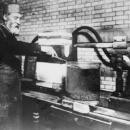
How Are Lab Grown Diamonds Made?
…. High Pressure High Temperature Diamonds How does nature form diamond crystals? Nature does it very deep underground. Diamond growing naturally takes place about 100 miles below the earth’s surface. Why? Because that is where the … above 2,000 degrees Celsius. In this environment, the pure carbon melts and begins to form into a diamond around the starter seed. On December 16, 1954, a belt press was used to create the first reproducible lab grown diamond. The diamond…
-
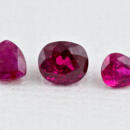
Gem in the Spotlight: Ruby
…, and spinel have been mistaken for each other. Famously, the Black Prince Ruby (formerly thought of as the largest cut ruby) at the center of the British Imperial State Crown, is actually a red spinel. History and Lore of Ruby The first… in the world. Weighing in at 25.59 carats, this ruby may not be the largest ruby ever found, but its color and cut is unrivaled. It is the most famous ruby, and was originally mined in Myanmar. The Sunrise Ruby was eventually set by …
-
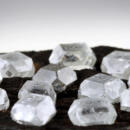
Is a Lab Grown Diamond Right for Me?
… accepted that it takes considerably less energy to grow a diamond in a lab than it does to dig it out of the ground. There is also no need to displace many tons of earth to create a lab grown diamond. You can, with 100% certainty, know … very expensive). Lab-grown diamonds are new and exciting . To put it mildly, the jewelry industry has been around for a long time. It’s quite rare that something truly new comes around. Even though man-made diamonds have been around …
-
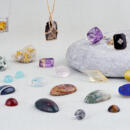
Gem in the Spotlight: Quartz
…, we’ll look at a small handful of quartz species to share a snippet of the colorful tapestry that has been woven around this amazing mineral. Rose Quartz is believed to be essential to fertility and is known as the stone of unconditional … said there is documentation proving that Ancient Egyptians would wear various kinds of quartz (typically agate) around their necks to heal and protect against stiff necks. As early as 300 BC banded agate was found in Sicily, and the …
-
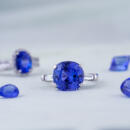
Gem in the Spotlight: Tanzanite
…. Gemology of Tanzanite Gemologists refer to this gem as blue zoisite. The vast majority (current estimates are around 95%) of tanzanite is heat treated to help bring out the vibrant blues. The stones that haven’t been heated by humans …. at the time, who named the stone tanzanite after the country of origin. Tiffany then started marketing the stone around 1968. The geological conditions required to form tanzanite are quite rare, leading some geologists to believe that it…
-

Laser Jewelry Repair
… of the laser is that very little heat is generated at the weld point. This means the heat will not damage the surrounding area. The jewelry’s intricate design and gems which are heat sensitive are safe from the heat with a laser. What … to use the laser with the skill of a micro surgeon. The laser gives our jewelers the precision he needs to work around our customer’s jewelry treasures. Arden jewelers can cut with the laser, weld two pieces of precious metal together, or…
-
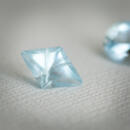
Gem in the Spotlight: Aquamarine
…. In the Middle Ages, aquamarine was believed to guarantee a happy marriage and inspire mutual fidelity in newlyweds. Notable Aquamarine Gemstones The largest gem-quality aquamarine gemstone ever mined was 19 inches long. The largest cut aquamarine is named the Dom Pedro and is an astounding 10,363 carats. It measures 14 inches long and is currently on display in the Smithsonian. Another famous aquamarine is the incredible stone housed in Queen Elizabeth’s tiara. Her …
