Search Results
Fine Jewelry University Articles matching: “lab grown diamonds shape”
Showing only FJU Article results. Click here to show all results.
Fine Jewelry University (Show All FJU Articles)
-
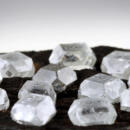
Is a Lab Grown Diamond Right for Me?
…, buying a diamond is a significant financial undertaking, and we want to get it right. Unfortunately, understanding diamonds takes a lot of specialized knowledge that most people don’t have (anyone remember their refractive indexes from high… and paranoia both from inside the trade and from outside observers. I have heard people say that natural diamonds come with a 400% mark up, or that most mined diamonds are conflict diamonds (both wild falsehoods). On the other hand, I have …
-
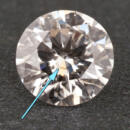
What Are Lab Grown Diamonds?
In the simplest terms, lab grown diamonds are diamonds that have been made by people instead of mined out of the earth. If it’s so simple, you might wonder …this sentence. The complexity arises from the fact that lots of different terms have been used to describe lab grown diamonds and their cousins, and not everyone uses these terms in the same way. So, let’s begin with some vocabulary. …. The same cannot be said of the many imitation or fake gems that are often, incorrectly, described as synthetic diamonds. This misrepresentation has seriously confused what the term “synthetic” means, and it’s why most producers of man-made …
-

How to Tell If a Diamond Is Natural or Lab Grown
… simple as you might think. First, you have to decide what “real” means. If you are not familiar with lab grown diamonds, you might want to check out our introduction to lab grown and synthetic diamonds before continuing with this article. So…comes to diamond simulants like Cubic Zirconia (CZ) or Moissanite, it is easy to identify them because they aren’t diamonds. But, with lab grown diamonds, the chemical structure and properties are all the same as natural diamond, so it …
-

How Are Lab Grown Diamonds Made?
…, many have tried to achieve this impressive feat. We have only recently been able to produce gem quality, lab grown diamonds that are large enough to be used in jewelry. But, how is it done? Early Efforts Throughout history, many people have… his techniques with some reported successes, but none could ever be scientifically verified. The quest continued. Diamonds are a crystalline form of carbon, and so making artificial carbon crystal was the problem of lab grown diamonds. For …
-
Fake Diamonds: The Great Diamond Attack
… they were someone and the contestant would try to find out who was the real person. Technology has created many new diamonds and diamond lookalikes. “What is a real diamond?” is a difficult question these days. And the problem of separating …carbon element) and crystal structure (cubic) as natural diamond but made in a factory. Yes, they can make synthetic diamonds and have for many years now. Most are used in the manufacturing of tools like diamond tip drills. Synthetic diamond …
-
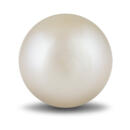
Gem in the Spotlight: Pearl
… Taylor. During Taylor’s ownership, the pearl was set into a necklace designed by Cartier, which also included diamonds and rubies. The La Peregrina pearl is one of the largest and most perfectly symmetrical natural pearls in existence. It … by which they are created is completely unpredictable, and as a result, natural pearls come in a wide range of shapes, sizes, and colors. They are typically irregular in shape and have a unique, organic beauty. Cultured pearls are created…
-
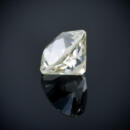
The History of Diamond Cuts
One of the earliest recorded statements about diamonds is: “the substance that possesses the greatest value, not only among the precious stones, but of all human …’s love of diamonds and our quest to unlock their true brilliance. Before Diamond Cutting The Romans loved diamonds but did not have the technology to change their shape. So, the Romans wore uncut diamonds. One of diamond’s remarkable … octahedral shape which looks like two pyramids stuck together at the base. Naturally, the first attempts to enhance diamonds were to polish the natural gem. The “point cut” is the polishing of a natural octahedral diamond. Interesting fact #…
-
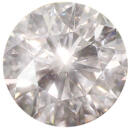
Diamond Buying Guide: The 4 C’s
If you understand how diamonds are graded, you have a better chance of finding the right one for you. At Arden Jewelers, our gemologists are more …the colorless range (D-F), and it’s set in yellow gold, it may appear to be much more yellow than it is. Fancy color diamonds are a fun, non-traditional option. While natural fancies can be very rare and extremely expensive, we now have the …a white diamond to almost any color you can imagine. You can read more about fancy diamond colors here. Clarity Most diamonds contain inclusions. Inclusions are natural birthmarks and useful as identifying characteristics. Clarity grading is …
-

What are “Blood Diamonds”?
Conflict diamonds are diamonds illegally traded to fund conflict in war-torn areas, particularly in central and western Africa. The … action in opposition to those governments, or in contravention of the decisions of the Security Council.” These diamonds are sometimes referred to as “blood diamonds.” In July 2000, the global diamond industry made clear to the international… the Kimberley Process Certification System. This system was formally adopted in 2003 and guards against conflict diamonds entering the legitimate diamond supply chain. The diamond industry also adopted a voluntary System of Warranties to …
