Search Results
Fine Jewelry University Articles matching: “Cushion lab”
Showing only FJU Article results. Click here to show all results.
Fine Jewelry University (Show All FJU Articles)
-
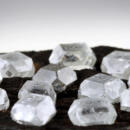
Is a Lab Grown Diamond Right for Me?
…diamonds are conflict diamonds (both wild falsehoods). On the other hand, I have heard some in the industry refer to lab grown diamonds as fakes (also completely false). We’re here to help cut through some of the rhetoric, so you can … informed and logical decision about what kind of diamond is right for you. First of all, if you’re not sure what a lab grown or synthetic diamond is, please check out our basic introduction to lab grown diamonds before reading on. So, …
-

How to Tell If a Diamond Is Natural or Lab Grown
…’s not as simple as you might think. First, you have to decide what “real” means. If you are not familiar with lab grown diamonds, you might want to check out our introduction to lab grown and synthetic diamonds before continuing with … like Cubic Zirconia (CZ) or Moissanite, it is easy to identify them because they aren’t diamonds. But, with lab grown diamonds, the chemical structure and properties are all the same as natural diamond, so it becomes much more difficult…
-
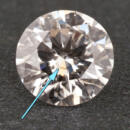
What Are Lab Grown Diamonds?
In the simplest terms, lab grown diamonds are diamonds that have been made by people instead of mined out of the earth. If it’s so simple, you … below this sentence. The complexity arises from the fact that lots of different terms have been used to describe lab grown diamonds and their cousins, and not everyone uses these terms in the same way. So, let’s begin with some … confused what the term “synthetic” means, and it’s why most producers of man-made diamonds prefer the term “lab grown” over “synthetic.” In order to appreciate this fully, it helps to understand a little bit about how lab grown diamonds…
-

How Are Lab Grown Diamonds Made?
… into gold, many have tried to achieve this impressive feat. We have only recently been able to produce gem quality, lab grown diamonds that are large enough to be used in jewelry. But, how is it done? Early Efforts Throughout history, … continued. Diamonds are a crystalline form of carbon, and so making artificial carbon crystal was the problem of lab grown diamonds. For decades, manufacturers of synthetic gemstones tried growing diamonds like they grew rubies, …
-
Fake Diamonds: The Great Diamond Attack
… a likes. Modern science has developed a man made gem that can fake out the standard diamond tester. Moissanite is lab-created, silicon carbide, and it gives a positive reading on a diamond tester. But science fights back with a … also has some gemological properties (it is a DR stone while diamond is a SR stone) that help identify it, but labs are working to change the nature of the stone. It has a Mohs hardness of 9.25, excellent toughness, refractive index of …
-
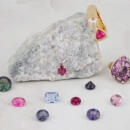
Gem in the Spotlight: Spinel
… up. Spinel is arguably the most overlooked and underappreciated gemstone of all time. Spinel was first made in a lab over 100 years ago when scientists who were trying to synthesize blue sapphire wound up creating spinel by mistake. … to create spinel in even more colors than it is naturally found in. Because of how easily it can be created in a lab, synthetic spinel has been used to imitate many other gemstones (ruby, sapphire, tourmaline, zircon, etc.). In fact, …
-
Understanding the Diamond Buying Game
… this is not always the case. Today, to make the grading standard more uniform, diamond certification by grading laboratories is thought to make diamonds a commodity. Again the dream is not the reality. The nature of diamonds is that … diamond is unique. Diamond reports don’t tell the whole story. First, it is well known that not all diamond grading labs grade with the same standard. GIA and AGS use the most technical standards. EGL uses a looser grading standard, I …
-
The Magic of Polarized Light
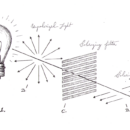
…of this in nature is sunlight reflecting off of the water. When the light bounces off of the surface, that reflected light is partially polarized. This is because some of the rays pass through the water, and some of them reflect. In a lab we typically polarize light by using a polarizing filter. These filters have a coating on them applied in such a way that all of the molecules are aligned with each other so only a certain vibrational direction of light can pass …
-
Anatomy of a Ring
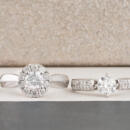
… that halos bring to most rings. In fact, like cathedrals, they can even help protect the center stone from damage. If you are shopping for a halo engagement ring, first look for the overall shape of halo that you like (e.g. round, cushion, square, something else), and then consider how the accent stones in the halo are set. Are they secure? Will the halo help protect the center stone from impact? So there you have it. A brief introduction to the anatomy of a ring. We hope…
