Search Results
Fine Jewelry University Articles matching: “Lab created alexandrite”
Showing only FJU Article results. Click here to show all results.
Fine Jewelry University (Show All FJU Articles)
-
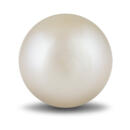
Gem in the Spotlight: Pearl
…even decades, to form, and are found only in a few select locations around the world. The process by which they are created is completely unpredictable, and as a result, natural pearls come in a wide range of shapes, sizes, and colors. They … natural irritant. The resulting pearl is virtually indistinguishable from a natural pearl in appearance, and can be created in a fraction of the time. Because of this, cultured pearls are far more common and affordable than natural pearls. …
-
Understanding the Diamond Buying Game
… this is not always the case. Today, to make the grading standard more uniform, diamond certification by grading laboratories is thought to make diamonds a commodity. Again the dream is not the reality. The nature of diamonds is that … diamond is unique. Diamond reports don’t tell the whole story. First, it is well known that not all diamond grading labs grade with the same standard. GIA and AGS use the most technical standards. EGL uses a looser grading standard, I …
-
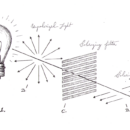
The Magic of Polarized Light
…of this in nature is sunlight reflecting off of the water. When the light bounces off of the surface, that reflected light is partially polarized. This is because some of the rays pass through the water, and some of them reflect. In a lab we typically polarize light by using a polarizing filter. These filters have a coating on them applied in such a way that all of the molecules are aligned with each other so only a certain vibrational direction of light can pass …
-
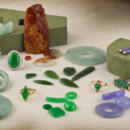
Gem in the Spotlight: Jade
…, maw sit sit, and hydrogrossular garnet. For a short amount of time, a few laboratories produced synthetic (lab–created) jadeite. This proved to be unprofitable and was quickly forgotten; however, a small amount of it remains on the market … a big impact on how gems are worn and what they can handle. We all know diamonds are the hardest gem commonly available on earth. If you scraped them together, a diamond would scratch a piece of jade while the much softer jade wouldn’t …
-
Frequently Asked Question about Jewelry
… in the field. The pace of change in the gem industry is staggering. What is Moissanite? Moissanite is lab–created silicon carbide. It has become an excellent diamond imitation since it gives a positive reading on a thermal inertia testers (… between a Diamond Certificate and an Appraisal? A Diamond Certificate is a document issued by a Gemological Laboratory describing a Loose Diamond. The laboratory will not issue certificates on Diamonds which are set in a mounting. A …
-

Laser Jewelry Repair
… spots. The work is so smooth that even an expert can’t detect the repair work once it is polished. The weld joints created by the laser are stronger than traditional solder. The laser uses extremely focused heat and the weld can be …
-
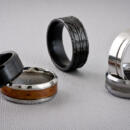
Alternative Metals for Men’s Jewelry
…ammunition. Tungsten wedding bands are not made out of pure tungsten. They are made out of tungsten carbide which is created by combining an equal number of tungsten and carbon atoms. Tungsten carbide rings need to combine tungsten ore in a …, lustrous, red surface. Burl wood rings are another creative use of nature and modern design. Burl wood is created when a tree growth has deformed. This fashions a beautiful, one-of-a-kind pattern which is very hard. Burl wood is often used…
-
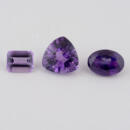
Gem in the Spotlight: Amethyst
…mythology. The word “amethystos,” is derived from the Greek word meaning “not drunken.” It is said that amethyst was created when Dionysus, the god of wine, was angered by an insult from a mortal. In his rage, Dionysus vowed to take revenge …
-
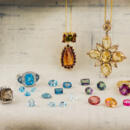
Gem in the Spotlight: Topaz
…if more orange). Smokey Topaz: Brownish grey color. Blue Topaz: The most common color. A full range of shades is available from light Sky Blue to dark London Blue. Topaz is also found in less commonly known colors like green, pink, and … used to put coatings on lenses for glasses and cameras. It is also one of the processes that is used to create lab grown diamonds . A thin, multi-colored film is bonded on the surface of colorless topaz to create all the colors you see …
