Search Results
Fine Jewelry University Articles matching: “Lab grown marquise”
Showing only FJU Article results. Click here to show all results.
Fine Jewelry University (Show All FJU Articles)
-
The Magic of Polarized Light
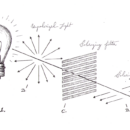
…of this in nature is sunlight reflecting off of the water. When the light bounces off of the surface, that reflected light is partially polarized. This is because some of the rays pass through the water, and some of them reflect. In a lab we typically polarize light by using a polarizing filter. These filters have a coating on them applied in such a way that all of the molecules are aligned with each other so only a certain vibrational direction of light can pass …
-
Diamond Buying Guide: The 4 C’s
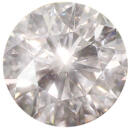
… to know what size you want. The photo above shows some common diamond carat weights and how they look in comparison to each other. Cut The Cut of a diamond has two main components. First, cut refers to the shape of the stone. Round, marquise, pear, oval, square, princess all describe the shape of the diamond. Checkout the picture above to see examples of the most popular diamond shapes. There are many more shapes than we can list here and there are even variations on the …
-
Gem in the Spotlight: Opal
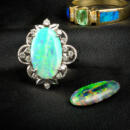
… jewelry. In triplets, that thin piece of opal is sandwiched between a piece of onyx and a clear piece of laboratory grown quartz (the same material that is commonly used for watch crystals). This helps show off the opal’s beauty while …
-
Gem in the Spotlight: Emerald
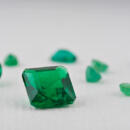
… add character and uniqueness to the stone. At this point in history, almost every emerald has had some level of treatment to make the fractures less visible. It is so common that if the stone doesn’t have a report from a reputable lab (like GIA) saying otherwise, it is assumed that it has been treated with some level of fracture filling. If you do come across an emerald that has a reputable gem report that says it hasn’t been fracture filled, you have come across …
-
Gem in the Spotlight: Alexandrite
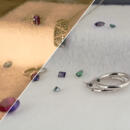
…) making it a great gift for that special someone with a birthday in June. Alexandrite is perfect for someone who wants the best of the best with a rare twist. One final note: while alexandrite in its natural form is expensive, its lab-created counterpart is very affordable. So no matter the occasion or budget, our gemologists will be able to find the right stone for you. Contact us today to get
-
Frequently Asked Question about Jewelry
… advancements in the field. The pace of change in the gem industry is staggering. What is Moissanite? Moissanite is lab-created silicon carbide. It has become an excellent diamond imitation since it gives a positive reading on a thermal … between a Diamond Certificate and an Appraisal? A Diamond Certificate is a document issued by a Gemological Laboratory describing a Loose Diamond. The laboratory will not issue certificates on Diamonds which are set in a mounting. A …
-
Gem in the Spotlight: Jade
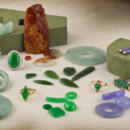
… a big impact on how gems are worn and what they can handle. We all know diamonds are the hardest gem commonly available on earth. If you scraped them together, a diamond would scratch a piece of jade while the much softer jade wouldn’t … the years are chrysoprase, serpentine, maw sit sit, and hydrogrossular garnet. For a short amount of time, a few laboratories produced synthetic (lab-created) jadeite. This proved to be unprofitable and was quickly forgotten; however, a…
