Search Results
Fine Jewelry University Articles matching: “Pink diamond rings”
Showing only FJU Article results. Click here to show all results.
Fine Jewelry University (Show All FJU Articles)
-
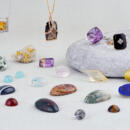
Gem in the Spotlight: Quartz
…eading names for gems. Quartz seems to have more than its fair share of misnomers. One famous one is “Alaska Diamond” for rock crystal alongside “Herkimer Diamonds” (see below). In recent times, the term “Green Amethyst,” which was commonly … (yes you read that correctly) slab of natural clear quartz and is one of the largest clusters ever found. Herkimer diamonds are a famous type of quartz not for their rarity, but for their ability to pass for diamonds to the untrained eye. …
-
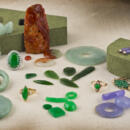
Gem in the Spotlight: Jade
… like splitting hairs, but it actually has a big impact on how gems are worn and what they can handle. We all know diamonds are the hardest gem commonly available on earth. If you scraped them together, a diamond would scratch a piece of …mark on the diamond. However, if you decided to smack both gems with a hammer (please don’t try this at home), the diamond would have a greater chance of shattering than the tougher jade. Nephrite: A silicate rich in calcium, iron and …
-
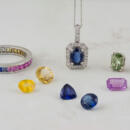
Gem in the Spotlight: Sapphire
… contains several sapphires. One of them, the Saint Edward’s Sapphire, is a large sapphire set in the center of a diamond cross on top of the British Imperial Crown. According to legend, Edward the Confessor, King of the Anglo-Saxons from …, green, orange, and golden yellow are magnificent in any jewelry. See More on Etsy › With the exception of the diamond, which measures 10 on the Mohs scale, sapphire and ruby (9 on the Mohs scale) are the toughest and most durable gemstones…
-

How to Tell If a Diamond Is Natural or Lab Grown
How can I know if my diamond is real? This is a question we get all the time, and it’s not as simple as you might think. First, you have to … are not familiar with lab grown diamonds, you might want to check out our introduction to lab grown and synthetic diamonds before continuing with this article. So, now you know that lab grown diamonds are just as real as natural diamonds, …comes to diamond simulants like Cubic Zirconia (CZ) or Moissanite, it is easy to identify them because they aren’t diamonds. But, with lab grown diamonds, the chemical structure and properties are all the same as natural diamond, so it …
-
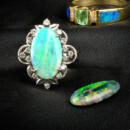
Gem in the Spotlight: Opal
… commonly used in jewelry. For reference, here are the Mohs hardness values for some other gemstones you may know: Diamond 10, Sapphire 9, Amethyst 7, and Peridot 6. Turquoise is about as hard as opal, but you would need to consider Pearl or… that could potentially damage the stone’s surface. For more valuable stones, setting them in a pendant or earrings instead of a ring will help them last as long as possible. With proper care opals can last for generations. Opals have very…
-
Platinum
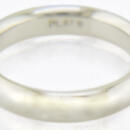
…white luster, have made platinum an increasingly popular choice for jewelry, either on its own or as the setting for diamonds and other precious gemstones. Platinum jewelry does not fade or tarnish and keeps its looks for a lifetime. …the strongest and most enduring metals. Some of the world’s greatest treasures are set in platinum, such as the Hope Diamond. It is also one of the heaviest, weighing 60% more than gold. The word platinum sometimes enjoys a cachet higher …
-
How Are Lab Grown Diamonds Made?
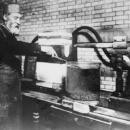
The dream of making a beautiful and valuable diamond from simple carbon has long captivated the imagination of scientists and visionaries alike. Just like the alchemists…, many have tried to achieve this impressive feat. We have only recently been able to produce gem quality, lab grown diamonds that are large enough to be used in jewelry. But, how is it done? Early Efforts Throughout history, many people …. Henri Moissan was one of the early pioneers in the field. In 1893, he claimed to have successfully made a diamond by heating charcoal to 3,500 degrees Celsius inside a carbon crucible. Many attempts were made to reproduce his techniques …
-

What are “Blood Diamonds”?
Conflict diamonds are diamonds illegally traded to fund conflict in war-torn areas, particularly in central and western Africa. The … action in opposition to those governments, or in contravention of the decisions of the Security Council.” These diamonds are sometimes referred to as “blood diamonds.” In July 2000, the global diamond industry made clear to the … the Kimberley Process Certification System. This system was formally adopted in 2003 and guards against conflict diamonds entering the legitimate diamond supply chain. The diamond industry also adopted a voluntary System of Warranties to …
-
Types of Necklace Chains
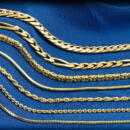
… one of the most durable chain designs there is. Each twist on these chains reflects light easily and when they are diamond cut they are extremely sparkly. Although most chain styles can come in a hollow link version, for rope chains, hollow…. The woven and filigree style of this chain will often have a light, airy feel. These chains will be often be diamond cut which gives them an even more lively and glittering appearance. Diamond cutting on a chain means there are small …
