Search Results
Fine Jewelry University Articles matching: “blue sapphire”
Showing only FJU Article results. Click here to show all results.
Fine Jewelry University (Show All FJU Articles)
-
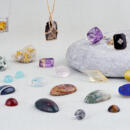
Gem in the Spotlight: Quartz
… Bloodstone Green jasper dotted with bright red spots Carnelian Reddish orange chalcedony Gemology of Quartz Quartz is known for its durability with a Mohs hardness rating of 7 (harder than opal and peridot but softer than topaz or sapphire). This makes it a fairly hard gemstone that is resistant to scratching and chipping. It is also resistant to heat and chemicals, which means that it can withstand daily wear and tear very well. All quartz has the same refractive index at…
-
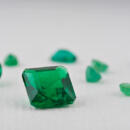
Gem in the Spotlight: Emerald
… and aquamarine) and are valued for their rich green color. The intensity of an emerald’s hue depends on the presence of chromium and vanadium in the crystal structure. Emerald’s Mohs hardness rating is 7.5-8 making it softer than sapphire and harder than amethyst and other quartz varieties. The refractive index of emerald ranges from 1.57 to 1.58, making it a moderately refractive gemstone. Its specific gravity ranges from 2.65 to 2.75. One of the distinctive features of …
-
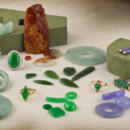
Gem in the Spotlight: Jade
…polish. Nephrite is commonly found in a darker olive green color but can also be very light green, orangey-red, black, and yellowish green. Jadeite can come in many different colors including pink, purple (often called lavender jade), blue, black, white, and the most valuable/desirable color: a vibrant green. The finest of all green jadeite colors is a saturated emerald green that is almost transparent, and it is called “Imperial Jade.” Jade is one of the top selling …
-
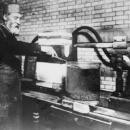
How Are Lab Grown Diamonds Made?
… lab grown diamonds. For decades, manufacturers of synthetic gemstones tried growing diamonds like they grew rubies, sapphires, and emeralds. It failed. Then they had the idea to grow diamonds in the lab like they grew in nature. High … gems. This is because even the smallest presence of nitrogen or boron during the process can result in a yellow or blue color respectively. Both HPHT and CVD diamonds tend to exhibit strong and unusual fluorescence characteristics when …
-
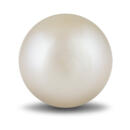
Gem in the Spotlight: Pearl
… Pearls: Also known as black pearls, Tahitian pearls are a type of saltwater pearl that are grown primarily in French Polynesia. They are known for their dark, rich colors, which range from dark green and gray to deep shades of blue and black. Tahitian pearls are generally large with an average size of 9mm to 18mm, and they commonly have baroque or irregular shapes. South Sea Pearls: Only a small percentage of oysters are able to produce these large, high-quality pearls…
-
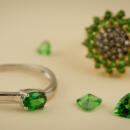
Gem in the Spotlight: Tsavorite Garnet
The discovery of Tsavorite in East Africa in the 1960s changed the jewelry world. Here was a gem with the color to rival the most exquisite emeralds and the clarity of the cleanest sapphires, all with the time tested durability of garnet. Tsavorite is a unique form of garnet with a stunningly vivid green color. It is bright and lively with a high refractive index giving it excellent sparkle and scintillation. Tsavorite …
-
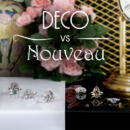
Art Deco vs. Art Nouveau Style Jewelry
…Art Deco jewelry design embraced symmetry, bold colors, and streamlined forms influenced by Cubism and the Machine Age. Precious metals like platinum and white gold alongside rare and valuable gemstones such as diamonds, emeralds, and sapphires, were the materials of choice for Art Deco jewelry makers. The most prevalent diamond cut found in Art Deco jewelry is the Old European cut, but some pieces still incorporated Old Mine cuts or transitional cuts. Design Principles Art…
