Search Results
Fine Jewelry University Articles matching: “pink emerald”
Showing only FJU Article results. Click here to show all results.
Fine Jewelry University (Show All FJU Articles)
-
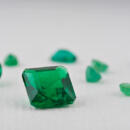
Gem in the Spotlight: Emerald
Springtime exudes life, full of bright colors and renewed energy. Emerald, May’s gemstone, captures this enthusiasm for life in rich elegance. This precious gemstone has been revered for … mineral family (along with morganite and aquamarine) and are valued for their rich green color. The intensity of an emerald‘s hue depends on the presence of chromium and vanadium in the crystal structure. Emerald’s Mohs hardness rating is 7… a moderately refractive gemstone. Its specific gravity ranges from 2.65 to 2.75. One of the distinctive features of emeralds is that they often contain inclusions. Sometimes these inclusions are referred to as jardin (the French word for …
-
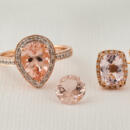
Gem in the Spotlight: Morganite
…it apart from many of the more popular gemstones. Morganite has an impressive family tree. It is a beryl gem which puts it in the same family as emerald and aquamarine. Because of its association with emerald it is sometimes called “Pink Emerald”. Other names for Morganite are “Pink Beryl”, “Rose Beryl”, and “Cesian (or caesian ) Beryl”. “Cesian” refers to the presence of the mineral Cesium which, along with manganese, contributes to the pink color of Morganite. Morganite was …
-
The Birthstones
… term: brilliance, hardness, rarity, antiquity, purity and permanence. Learn more about Diamond May’s Birthstone: Emerald A symbol of love and rebirth, the emerald has been treasured for over 4,000 years. The name for the emerald is derived … “smaragdos”, meaning green stone. Spring and green symbolized faith and fertility. The early Christians valued the emerald as a symbol of resurrection. Emerald was believed to have special powers to improve a person’s psychic abilities and …
-
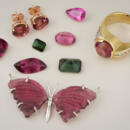
Gem in the Spotlight: Tourmaline
… hundreds of years. But, before the advent of modern gemology, most tourmaline was believed to be ruby, sapphire, or emerald. Gemology of Tourmaline Gemologically speaking, tourmaline is its own mineral and not a species or member of a …was first discovered in 1554 in Brazil when Francisco Spinoza’s expedition confused its vibrant green with that of emerald. Thus began a long trend of confusing tourmaline with other gems. Another notable example of this is the “Caesars Ruby…
-
Gem in the Spotlight: Alexandrite
Emerald by day, ruby by night, more expensive than diamond and more illustrious than sapphire, emerald, or even ruby, …the Ural Mountains in Russia in the 1830s. When it was first discovered by a Finnish mineralogist, he mistook it for emerald because of how exceptional the green was in daylight. Named after the Russian prince Alexander II, the first stones …
-
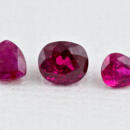
Gem in the Spotlight: Ruby
… in the color red which comes from trace amounts of chromium in the crystal structure. If they are too purple or too pink, they are called purple sapphires or pink sapphires, respectively. Since sapphires and rubies are the same gem …
-
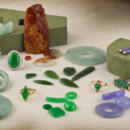
Gem in the Spotlight: Jade
…white, and the most valuable/desirable color: a vibrant green. The finest of all green jadeite colors is a saturated emerald green that is almost transparent, and it is called “Imperial Jade.” Jade is one of the top selling gems in Asia, but…
-
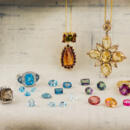
Gem in the Spotlight: Topaz
… softer than diamond which is a 10 and corundum (sapphire/ruby) which is a 9 on the scale. It is a bit harder than emerald at 7.5-8 and quartz which comes in at 7. Here are some more gemological stats for reference: Refractive index: 1.619 … is available from light Sky Blue to dark London Blue. Topaz is also found in less commonly known colors like green, pink, and purple. Imperial Topaz is by far the most valuable variety, while colorless topaz is often the least expensive…
-
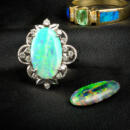
Gem in the Spotlight: Opal
…: “For in them you shall see the living fire of the ruby, the glorious purple of the amethyst, the sea green of the emerald, all glittering together in an incredible mixture of light.” During the Middle Ages, opal gained an interesting …. Opals can also sometimes be dyed, giving them an unnatural but fascinating body color such as a vibrant green or pink. Some opals that have cracked can sometimes be reused by making “mosaic opals” gluing smaller broken pieces of opal …
