Search Results
Fine Jewelry University Articles matching: “Lab created diamond rings”
Showing only FJU Article results. Click here to show all results.
Fine Jewelry University (Show All FJU Articles)
-
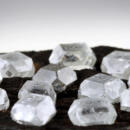
Is a Lab Grown Diamond Right for Me?
Picking a diamond for your engagement ring is a big decision. For most of us, buying a diamond is a significant financial undertaking… don’t have (anyone remember their refractive indexes from high school physics?). Even more unfortunately, the diamond industry suffers from a lot of misinformation and paranoia both from inside the trade and from outside observers. I have … conflict diamonds (both wild falsehoods). On the other hand, I have heard some in the industry refer to lab grown diamonds as fakes (also completely false). We’re here to help cut through some of the rhetoric, so you can make an informed …
-
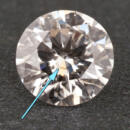
What Are Lab Grown Diamonds?
In the simplest terms, lab grown diamonds are diamonds that have been made by people instead of mined out of the earth. If it’s so simple, you might wonder …this sentence. The complexity arises from the fact that lots of different terms have been used to describe lab grown diamonds and their cousins, and not everyone uses these terms in the same way. So, let’s begin with some vocabulary. … mean man-made, copied, unreal, or even imitation. But, in this context, what do we mean when we say “synthetic diamond”? In the gemological world, synthetic is a highly technical term. When speaking technically, synthetic gems are man-made …
-

How to Tell If a Diamond Is Natural or Lab Grown
How can I know if my diamond is real? This is a question we get all the time, and it’s not as simple as you might think. First, you have to … are not familiar with lab grown diamonds, you might want to check out our introduction to lab grown and synthetic diamonds before continuing with this article. So, now you know that lab grown diamonds are just as real as natural diamonds, …comes to diamond simulants like Cubic Zirconia (CZ) or Moissanite, it is easy to identify them because they aren’t diamonds. But, with lab grown diamonds, the chemical structure and properties are all the same as natural diamond, so it …
-

How Are Lab Grown Diamonds Made?
The dream of making a beautiful and valuable diamond from simple carbon has long captivated the imagination of scientists and visionaries alike. Just like the alchemists…, many have tried to achieve this impressive feat. We have only recently been able to produce gem quality, lab grown diamonds that are large enough to be used in jewelry. But, how is it done? Early Efforts Throughout history, many people …. Henri Moissan was one of the early pioneers in the field. In 1893, he claimed to have successfully made a diamond by heating charcoal to 3,500 degrees Celsius inside a carbon crucible. Many attempts were made to reproduce his techniques …
-
Fake Diamonds: The Great Diamond Attack
… all say that they were someone and the contestant would try to find out who was the real person. Technology has created many new diamonds and diamond lookalikes. “What is a real diamond?” is a difficult question these days. And the problem … diamond from all the modern possibilities is quite demanding. So what is a real diamond? Let’s start with the older diamond look a likes, (CZ, GGG, YAG, Synthetic corundum and spinal, Glass) or simulants are quite easy to separate. The …
-
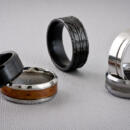
Alternative Metals for Men’s Jewelry
… are some potential cons to wearing a titanium ring that you should consider. Titanium rings can be cut off with a diamond-tip ring cutter, but because of their very high strength, Titanium rings are much more difficult to cut off than other…. Tungsten is rated at about a 9 on the Mohs scale of hardness which is the same as Ruby or Sapphire and just below diamond (which is 10). Like these gems, tungsten is very scratch resistant and will not bend out of shape, but it will break …
-
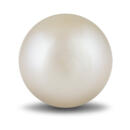
Gem in the Spotlight: Pearl
…even decades, to form, and are found only in a few select locations around the world. The process by which they are created is completely unpredictable, and as a result, natural pearls come in a wide range of shapes, sizes, and colors. They … natural irritant. The resulting pearl is virtually indistinguishable from a natural pearl in appearance, and can be created in a fraction of the time. Because of this, cultured pearls are far more common and affordable than natural pearls. …
-
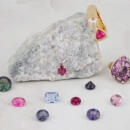
Gem in the Spotlight: Spinel
… and perfected to create spinel in even more colors than it is naturally found in. Because of how easily it can be created in a lab, synthetic spinel has been used to imitate many other gemstones (ruby, sapphire, tourmaline, zircon, etc.). … of the reason why most people have been slow to appreciate natural spinel in its own right. Interestingly, most lab–created spinel has a slightly higher refractive index than natural spinel, and that, along with inclusions can be used to …
-
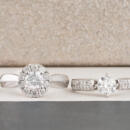
Anatomy of a Ring
… two straight pieces of metal on either side of it (this style is most commonly seen with square or princess cut diamonds). As you may have guessed, all styles of head can wear thin over time and may need to be built up by a jeweler. When … various styles and thicknesses of cathedral arches. Some are sleek and plain, some are wider and covered in accent diamonds. The size and cut of the center stone also may vary, but when you see those arches of metal rising up toward the …
