Search Results
Fine Jewelry University Articles matching: “pearl spotlight”
Showing only FJU Article results. Click here to show all results.
Fine Jewelry University (Show All FJU Articles)
-
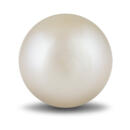
Gem in the Spotlight: Pearl
Pearls have captured the imagination and adoration of people from diverse backgrounds throughout history. They are both … and infinitely complex. Let’s explore the science, history, and lore surrounding this most unique gem. How Are Pearls Formed? Pearls are formed when a foreign object enters the shell of a mollusk and irritates the soft mantle tissue … and protect itself. Over time, layer upon layer of nacre is deposited around the irritant, eventually forming a pearl. This process can occur naturally or via human intervention. Natural pearls grow in the wild without human intervention…
-
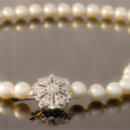
How to Clean Pearl Jewelry
Pearls are considered by many to be symbols of purity and chastity. But even symbols of purity get dirty from time to time…As you know pearls are produced when a mollusk secretes nacre to form a covering around a foreign body in its shell. Pearls are not as durable as gemstones produced by the heaving pressure beneath the earth’s surface. Therefore special … on and the first thing that you take off. Common personal products like cosmetics and perfume can severely damage pearls. They should be cleaned in warm soapy water periodically, gently scrubbing individually with a soft brush. A soft …
-
Gem in the Spotlight: Alexandrite
… is simply one of the most magnificent gemstones that exists. Its almost magical ability to change color has captivated our hearts and minds for generations. Alexandrite is one of June’s birthstones (along with moonstone and pearl) making it a great gift for that special someone with a birthday in June. Alexandrite is perfect for someone who wants the best of the best with a rare twist. One final note: while alexandrite in its natural form is expensive, its lab-created …
-
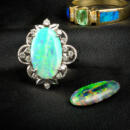
Gem in the Spotlight: Opal
… commonly used in jewelry. For reference, here are the Mohs hardness values for some other gemstones you may know: Diamond 10, Sapphire 9, Amethyst 7, and Peridot 6. Turquoise is about as hard as opal, but you would need to consider Pearl or Amber (both 2.5) to find a commonly used gem that is softer than opal. Common Opal Treatments There are several different treatments that can be applied to opals to alter their appearance. By far the most common is “sugar” or “smoke…
-
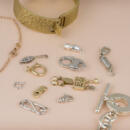
Types of Jewelry Clasps
… need to be adjusted though. Bring it in to your local jeweler to have them check it out. Strand Fish Hook Clasp (Pearl Clasp) At first glance you might thing this style of clasp is something like a sideways box clasp. Indeed, some box … catch and prevent the clasp from opening fully. It is a clever and beautiful design that is most often found on pearl strands, but it can work with most chain designs. PROS Style – This is a delicate, low-profile fastener that enhances …
-
The Birthstones
…. It was also believed to be a symbol of faith and loyal friendship. Learn more about Emerald June’s Birthstone: Pearl (Moonstone, Alexandrite, Rhodolite Garnet) Pearls are often associated with love and tears, they were dedicated to … tears of Venus, the Roman goddess of love. Pearls are recognized as the emblem of modesty, chastity and purity. A pearl is the product of an oyster’s defense mechanism. When a foreign irritant is introduced either by man (cultured) or …
-
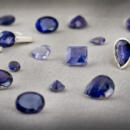
Gem in the Spotlight: Iolite
Iolite is maybe not the first gemstone people think of for their blue-violet jewelry, but it should be near the top of the list. Iolite’s color range of blue, blue-violet, and violet competes for public attention with sapphire, tanzanite, and amethyst. They may have name recognition, but iolite has a rich, unique color and great gem value on its side. It is more subtlety nuanced than amethyst and deeper than many tanzanites. Iolite’s name comes from its violet color. It is from the Greek word “ios” meaning violet. Unlike many
-
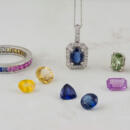
Gem in the Spotlight: Sapphire
Few gems capture the imagination as does sapphire. Sapphire’s beauty inspired people to wonder. Ancient cultures had many lore and beliefs about the sapphire. The ancient Persians believed the earth rested on a giant sapphire whose reflection gave the sky its color. Ancient priests and sorcerers honored sapphire above all gems, for this stone enabled them to interpret oracles and foretell the future. Symbolizing truth, sincerity and tradition, it has been said that when Moses received the Ten Commandments they rested on tablets of sapphires. Marriage partners put great faith
-
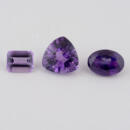
Gem in the Spotlight: Amethyst
Amethyst is known for its beautiful purple color, and it is the most important quartz variety used in jewelry. Purple has long been considered a royal color, so it is not surprising that amethyst has been in so much demand throughout history. Gemology Amethyst is a variety of quartz that is colored by the presence iron and aluminum. The violet color of amethyst can range from a pale lavender to a deep, dark purple, and it is often found in shades of pale to medium purple. Amethyst is typically found
