Search Results
Fine Jewelry University Articles matching: “selling loose gems”
Showing only FJU Article results. Click here to show all results.
Fine Jewelry University (Show All FJU Articles)
-
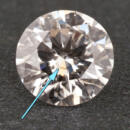
What Are Lab Grown Diamonds?
… diamond”? In the gemological world, synthetic is a highly technical term. When speaking technically, synthetic gems are man-made crystals with the same crystal structure and chemical composition as the specific gem that is being created… structure and chemical composition as a natural diamond. The same cannot be said of the many imitation or fake gems that are often, incorrectly, described as synthetic diamonds. This misrepresentation has seriously confused what the term…
-
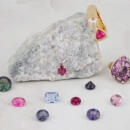
Gem in the Spotlight: Spinel
… of an action movie, but it could also be the title of this article. For years spinel has been confused with other gems and even today is often used as a substitute for similar looking stones. In recent years, spinel has started to move …own right, and we can see why. Its colors rival even the best rubies, sapphires, tourmalines, and other more popular gems. For only the 3rd time in the last one hundred years, the industry is modifying the official birthstone list. Spinel…
-
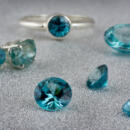
Gem in the Spotlight: Blue Zircon
Zircon may be last in the alphabet of gemstones, but it is first in sparkle. The crystal structure of zircon creates one of the liveliest displays found in any…golden, saffron, and colorless. Zircon colors are pure and have that distinctive fire that sets it apart from other gems. The Gemology of Zircon Why does zircon have so much more fire then other colored gems? Zircon has a high refractive …Zircon is also called, imaginatively, Blue Zircon. Blue zircon was a specific favorite in Victorian times, when fine gems were often featured in English estate jewelry dating from the 1880s. Tiffany’s famous gemologist George Kunz was a …
-
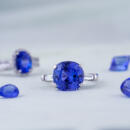
Gem in the Spotlight: Tanzanite
Beauty and rarity are two wonderful traits in a gemstone. Tanzanite has them both. In fact, it is estimated that Tanzanite is 1,000 times rarer than diamond. But, what … in tanzanite. Yet, even with its rarity and dynamic look, tanzanite is still less in price than more commonly known gems like rubies, sapphires, and emeralds. Gemology of Tanzanite Gemologists refer to this gem as blue zoisite. The vast … that isn’t heated and is still pretty enough for jewelry displays trichroism. Trichroism is an effect that causes gemstones to display different colors when viewed at different angles. Tanzanite in its raw form has three colors: blue, …
-
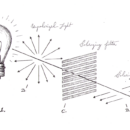
The Magic of Polarized Light
… Polarizing filters are critical to many fields of study. Without them, we wouldn’t be able to easily identify gemstones, TVs and monitors wouldn’t work in the same way, and the latest blockbuster movie wouldn’t pop off the screen the way… allow them to function efficiently as they do without negative side effects. Using Polarized Light in Gemology Some gemstones, due to their unique chemical structure, actually polarize light themselves. These gems are doubly refractive (…
-
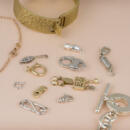
Types of Jewelry Clasps
…. This is one of the reasons why they are often used on bracelets. CONS Longevity – The tongue (insert) can become loose over time and will need to be adjusted. If the tongue is made out of silver this can happen quite quickly. … clasps, a fold over is only as strong as the tension in the metal that holds it in place. Over time the clasp can loosen and need to be adjusted. Also, like box clasps, this loosening happens much faster with softer metals like sterling …
-
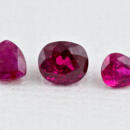
Gem in the Spotlight: Ruby
… the process. You can use an ultrasonic cleaning machine with rubies, but use caution as these machines can cause loose gems to come out of their settings. Remember to dry your ruby jewelry thoroughly before wearing or storing. Why Ruby? …For much of human history, rubies have been the most prized gemstone. But, what is it about this red gem that has captivated our hearts and minds for so long? Is it ruby’s color? It… deeper? Whatever it is, ruby’s impact on humanity is broad and deep, with arguably the richest history of all gemstones. Gemology of Ruby Rubies are in the corundum gem family along with sapphires. Corundum is an extremely durable form …
-
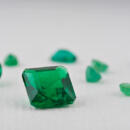
Gem in the Spotlight: Emerald
Springtime exudes life, full of bright colors and renewed energy. Emerald, May’s gemstone, captures this enthusiasm for life in rich elegance. This precious gemstone has been revered for over 4,000 … other quartz varieties. The refractive index of emerald ranges from 1.57 to 1.58, making it a moderately refractive gemstone. Its specific gravity ranges from 2.65 to 2.75. One of the distinctive features of emeralds is that they often … to green than to any other color thereby making it easier on the eyes. Pliny said that emeralds were the only gemstones that delighted the eye without fatiguing it. In fact, Emperor Nero was said to wear a kind of emerald glasses to …
-
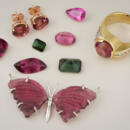
Gem in the Spotlight: Tourmaline
Tourmaline is one of the most beautiful gems that you’ve probably never heard of. Less popular than the likes of ruby or sapphire, tourmaline flies under the …. History and Lore of Tourmaline The name tourmaline comes from the Singhalese word turamali, which means “mixed gems” owing to the fact that the gem can look like many others. Tourmaline was first discovered in 1554 in Brazil when … confused its vibrant green with that of emerald. Thus began a long trend of confusing tourmaline with other gems. Another notable example of this is the “Caesars Ruby,” the 255ct stone in the Russian crown jewels that has been traded …
