Search Results
Fine Jewelry University Articles matching: “Pur means”
Showing only FJU Article results. Click here to show all results.
Fine Jewelry University (Show All FJU Articles)
-
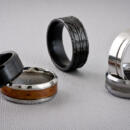
Alternative Metals for Men’s Jewelry
…, or platinum. Its extreme hardness makes it resistant to scratching, but it does have brittle properties. This means that if enough pressure is applied to a tungsten wedding ring, the ring will crack or break instead of bending. This is … platinum and also what led to its use in armor piercing tank ammunition. Tungsten wedding bands are not made out of pure tungsten. They are made out of tungsten carbide which is created by combining an equal number of tungsten and …
-
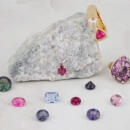
Gem in the Spotlight: Spinel
…generations even becoming a treasured family heirloom. Why Spinel? Despite its long history spinel is relatively new to jewelry in the sense that it is only recently getting attention on its own and not just imitating other gems. This means that the prices are still relatively low for a stone of this durability, rarity, and beauty. Spinel can be just as stunning as top-quality rubies at just a fraction of the price. Now that spinel is joining peridot as one of August’s …
-
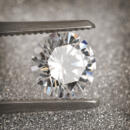
Diamond Brokering
… us. Our brokerage has links to hundreds of diamond importers, wholesalers, dealers and traders. We use high-tech means to reach the most sophisticated companies and low-tech to mine even one person operations all with the goal of finding … questions and explore what we can do for you. Using a gemologist diamond broker to guide you through your diamond purchase insures the mastery of the minute details in diamond evaluations. Did you know diamonds of the same grade could …
-
The Birthstones
… wealth. Colors in turquoise range from sky blue (the most desirable color) to blue green and apple green. The name means “Turkish stone” because the trade route that brought it to Europe used to come via Turkey. Turquoise is associated … difficulties. Learn more about Garnet and Tasvorite Garnet February’s Birthstone: Amethyst Amethyst, transparent purple quartz, is the most important quartz variety used in jewelry. Purple has long been considered a royal color so it is…
-
Gem in the Spotlight: Alexandrite
…’s crystal structure. It absorbs most wavelengths of light very well, only transmitting green and red light. This means that depending on the light source the stone will reflect more of the accent colors of light. Since fluorescent light …
-
Fake Diamonds: The Great Diamond Attack
…, and a specific gravity of 3.21. More creative uses of this man made gem are in the pipeline. The Big Bad Synthetic In the gem world we use words with particular meanings. Synthetic is one of those words. Synthetic, in the gem world, means made of the same chemicals (elements) and crystal design as nature but is man made. So, a synthetic diamond is the same chemistry (carbon element) and crystal structure (cubic) as natural diamond but made in a factory. Yes, they can …
-
Gem in the Spotlight: Garnet
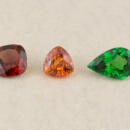
…up the night. Noah used a garnet lantern to navigate the Ark at night. The ancient world is full of praise for the carbuncle, the glowing red gemstone we now know as garnet. Early scientists named garnet from the Latin granatus, which means ‘seedlike’ because garnet crystals in rock reminded them of the shape and color of pomegranate seeds. Garnet is really a group of gemstones. The pyrope, almandine and spessartite are the red – brown to orange sometimes with a tint of …
-

How to Tell If a Diamond Is Natural or Lab Grown
…question we get all the time, and it’s not as simple as you might think. First, you have to decide what “real” means. If you are not familiar with lab grown diamonds, you might want to check out our introduction to lab grown and synthetic … or not it is a Type IIa diamond. Type IIa is actually a gemological variant of the diamond that relates to how pure the carbon is that makes up the diamond. In nature, less than 2% of all diamonds are Type IIa, however, most gem quality…
-
Gem in the Spotlight: Tourmaline
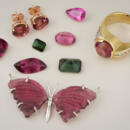
… the stone to be used in early sonar systems in the First World War as well as in extremely sensitive pressure gauges in submarines. History and Lore of Tourmaline The name tourmaline comes from the Singhalese word turamali, which means “mixed gems” owing to the fact that the gem can look like many others. Tourmaline was first discovered in 1554 in Brazil when Francisco Spinoza’s expedition confused its vibrant green with that of emerald. Thus began a long trend of …
